

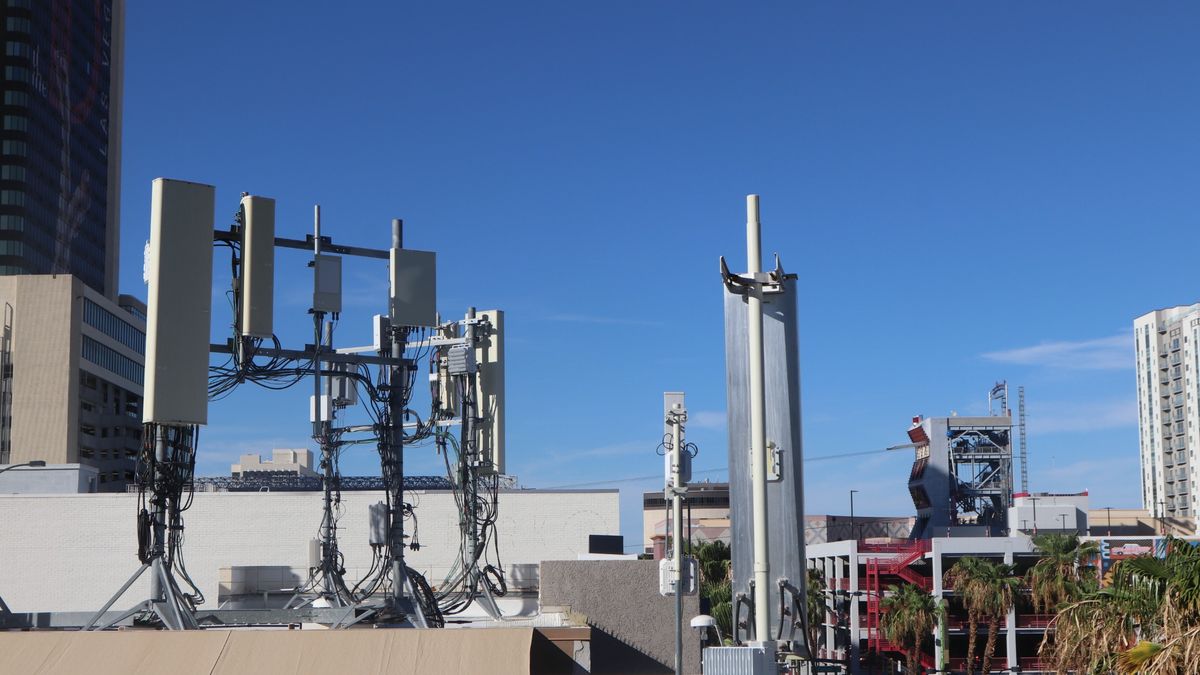
LAS VEGAS SMART CITY | DIGITAL INCLUSION | COMMUNITY BROADBAND
Las Vegas Smart City Expands Free Wi-Fi and Broadband Access Downtown
A privately funded broadband network built to connect residents, students, workers, visitors and vulnerable individuals is already operating across parts of downtown Las Vegas as city technology officials review its coverage and possible expansion.
Las Vegas Smart City — At a Glance
How it works: Inside supported coverage areas, the mesh systems are designed to help compatible users stay connected as they move. Where the mesh does not yet reach, provisioned LTE/CBRS routers can bring broadband connectivity to a household, student, community location or emergency deployment.
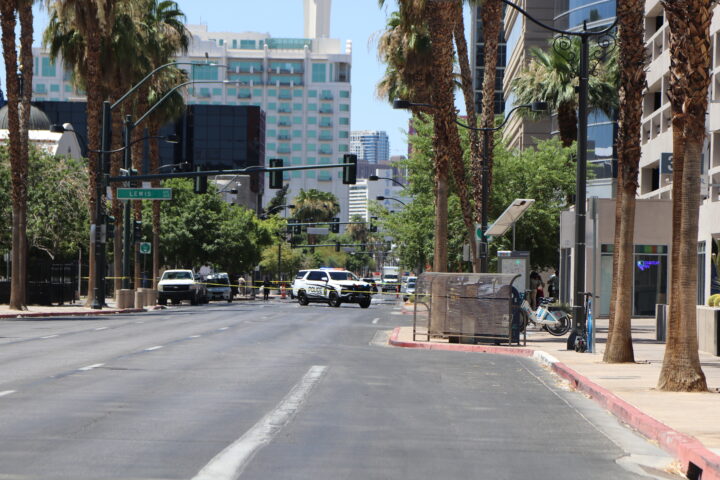
LAS VEGAS — A privately funded Las Vegas Smart City broadband network is already operating across parts of downtown Las Vegas, providing free public internet access while its organizers pursue a larger mission: helping people connect to the resources, work and services they need to move forward.
Las Vegas Smart City, developed by Las Vegas News / Las Vegas Newspaper in partnership with New Hope Foundation International, was built around a broader idea: connectivity can be economic, educational and community infrastructure — not simply a public convenience.
New Hope Foundation International is a Las Vegas-based nonprofit organization fighting human trafficking through awareness, education and prevention efforts. The Smart City project grew from the organization’s focus on conditions that can leave vulnerable individuals more susceptible to exploitation, including homelessness, poverty, economic instability, isolation and lack of access to opportunity.
The project has been active since October 2024. Its infrastructure combines free public Wi-Fi, enterprise-grade Wi-Fi 7, overlapping mesh systems, LTE/CBRS broadband, provisioned SIM connectivity, mobile networking, redundant communications capability and technology that can support IoT devices and future Smart City applications.
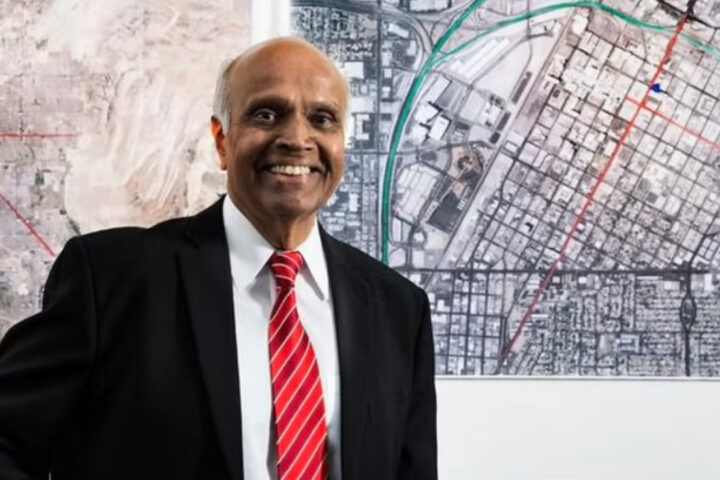
“New Hope Foundation International’s mission is to fight human trafficking through awareness, education and prevention. But prevention also means looking at the conditions that make people vulnerable in the first place. When someone has no access to housing resources, employment opportunities, education or basic communication, that person can become easier to isolate and exploit. Expanding reliable connectivity is one way we can help remove some of those barriers.”
— Ryuichi Fujita, CEO, New Hope Foundation International
A Network Built for People Who Need a Way Back
For someone experiencing homelessness, getting online can be harder than many people realize.
A person may still have a working phone but no active data plan, no home broadband and nowhere they feel comfortable walking into simply to ask for a Wi-Fi password. Yet that same phone may be the device they need to search for work, locate shelter, submit a housing application, access government assistance, contact a caseworker, find transportation, reach legal resources or communicate with a support organization.
Organizers say the public-access portion of the Las Vegas Smart City network is designed to remove some of that friction within supported coverage areas.
The network does not require a person to buy a meal, book a hotel room or prove they can afford another monthly internet bill before getting online. Its public-access model is intended to serve people without discrimination based on race, color, ethnicity, housing status or economic circumstances.
“For someone experiencing homelessness, getting online can be harder than people realize. A person may need to apply for work, contact a caseworker, search for shelter, access benefits or communicate with family, but they may not have data service or feel comfortable walking into a business just to ask for a Wi-Fi password. A public network that is available without judgment can give people another chance to take the next step.”
— Michelle Callahan, Community Support Representative, New Hope Foundation International
Project leaders are careful not to claim that internet access alone can solve homelessness or human trafficking. Instead, they describe connectivity as one practical tool that can reduce barriers to employment, housing, education, government services and legitimate economic opportunity.
The Core Idea
For one person, the network may mean faster internet. For another, it may be the connection they need to begin rebuilding their life.
Beyond Las Vegas Free Wi-Fi: Smart City, IoT and Emergency Applications
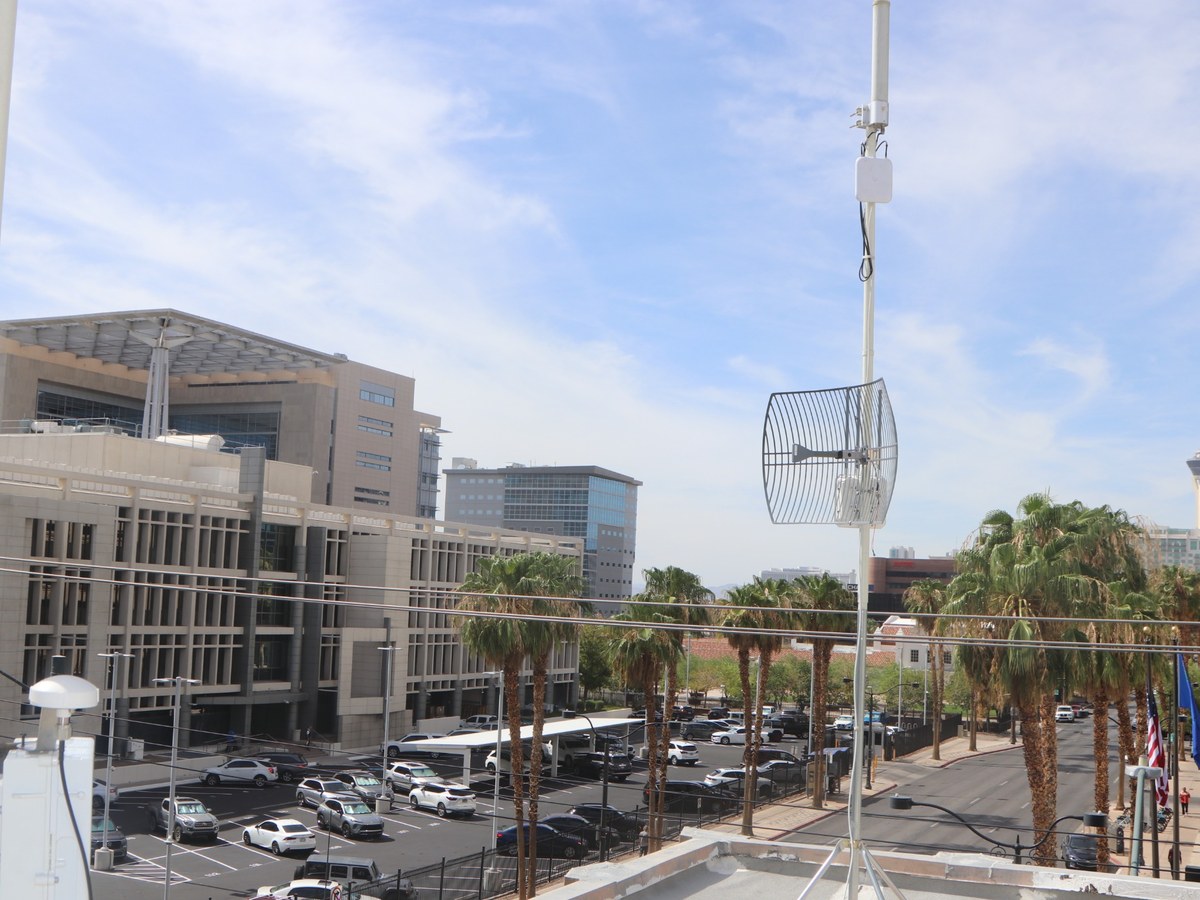
The most visible part of the project may be free Wi-Fi in downtown Las Vegas, but the system behind it is broader than a traditional hotspot network.
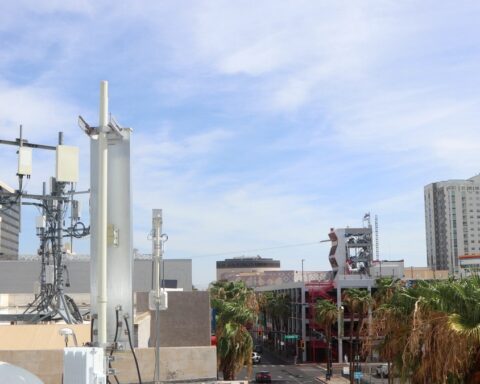
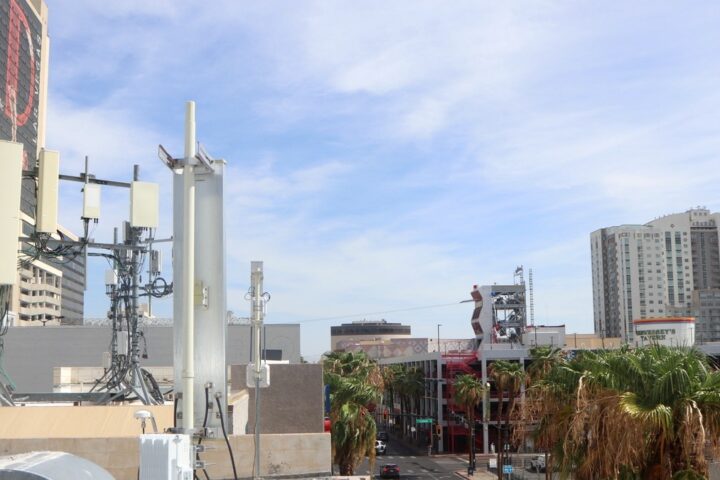
The infrastructure includes enterprise-grade Wi-Fi 7, LTE/CBRS-capable systems, fiber-backed transport, redundant connectivity, high-gain antenna systems, mobile-deployment equipment and support for Internet of Things devices.
That means different parts of the same platform can support different needs. A pedestrian may connect through free public Wi-Fi. A compatible device may use an authenticated access pathway. Sensors and connected equipment can operate across the infrastructure for Smart City applications. Mobile equipment can establish temporary broadband service when needed.
And in places where the downtown mesh systems do not yet reach, provisioned LTE/CBRS routers can take the network beyond the existing Wi-Fi coverage footprint.
“We built this as infrastructure for the people. Connectivity should not depend on whether someone has a home, can afford another monthly bill or feels comfortable walking into a business to ask for a Wi-Fi password. If the network can help someone find work, finish homework, access services or begin rebuilding their life, then the infrastructure is doing what we built it to do.”
— Prince Adeyemi, chief operating officer and technical operating lead
Mesh Systems Designed to Move With Users
Traditional public Wi-Fi often works like a series of isolated islands. A user connects in one place, moves out of range, loses the connection and then has to search for another network.
The Las Vegas Smart City deployment is designed differently.
Across supported downtown areas, overlapping mesh systems create an interconnected coverage environment intended to provide greater continuity as compatible users move between network nodes.
That structure can matter for people whose work depends on staying online.
A rideshare driver may rely on mobile connectivity for navigation, incoming trip requests, passenger communication, location services and payment processing. A delivery driver may depend on the same constant access for dispatch information, route updates and customer communication.
The network does not guarantee uninterrupted service or eliminate every mobile dead zone. But within supported Smart City coverage areas, it can provide another broadband pathway and reduce the need for compatible users to repeatedly search for separate public hotspots.
Outside the Mesh, Routers Can Bring Broadband to the User
The project is not limited to people standing inside the downtown Wi-Fi mesh.
Where direct mesh coverage is unavailable, compatible pocket routers or household gateways can use project-provisioned SIM cards to connect through supported LTE/CBRS infrastructure. Those routers can then share broadband locally with phones, tablets, laptops and other devices.
That approach could extend connectivity to students, households, community programs, temporary locations and areas outside the current mesh footprint.
How the Access Model Works
Inside supported coverage areas, mesh systems are designed to keep connectivity with the user. Outside the mesh, a provisioned router can bring broadband connectivity to the user.
One Router Could Connect a Household
For an underserved household, one provisioned router could turn an LTE/CBRS broadband connection into internet access for multiple family members.
A child could complete homework on a school-issued laptop while a parent uses another device to apply for a job, attend an online certification class, complete a remote interview or operate a small online business.
The same connection could help another household member access government services, communicate with a medical provider, complete an online form or participate in training.
For homebound residents, the impact could be even greater.
A person who cannot easily leave home because of medical, mobility or other circumstances may depend on broadband as a primary connection to employment, education, customers, public services and the wider economy.
Schools and Students Could Take Connectivity Beyond the Classroom
Schools, nonprofits and community programs could also use compatible routers to help address the homework connectivity gap.
A student may have access to a computer at school but unreliable internet at home. A provisioned router could provide another way to complete homework, participate in tutoring, research assignments, use classroom platforms or prepare college and job applications after school hours.
Because the router can support multiple nearby devices, the benefit can extend beyond the student to the rest of the household.
For project organizers, that connection between education and household stability is central. Students need access to learn. Adults need access to work, train, apply and build income. Both needs can exist under the same roof.
A Network for Residents, Workers and Visitors
Las Vegas also has a major visitor economy, and the same infrastructure can support tourists and convention attendees moving through downtown.
Visitors depend on mobile connectivity for rideshare transportation, hotel reservations, digital tickets, maps, restaurant information, translation, messaging, video calls and streaming their experiences.
Within supported areas, free public Wi-Fi and compatible authenticated access pathways provide additional options without forcing users to continually search for a new Wi-Fi password at each property they visit.
The same network can serve residents, hospitality workers, mobile workers, convention attendees and visitors rather than creating separate systems for each group.
Emergency Preparedness Is Part of the Design
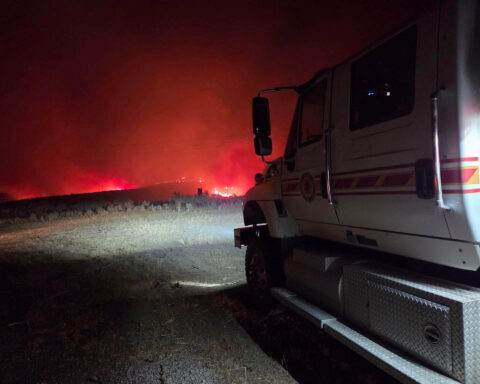
The infrastructure was also designed with rapid deployment and emergency preparedness in mind.
Cradlepoint R1900/E300-based equipment, portable networking systems, backup connectivity and mobile broadband components can be deployed to temporary locations where communications are needed quickly.
Potential uses include emergency shelters, community response sites, major public events, field operations and other locations where conventional communications are unavailable, congested or inadequate.
For the public, temporary connectivity during an emergency could mean being able to contact family, locate shelter information, receive instructions, access maps or communicate with organizations providing assistance.
The system is not presented as a replacement for official public-safety radio or government emergency communications networks. Instead, project organizers describe it as an additional broadband communications layer that could support authorized deployments and community connectivity.
Smart City Infrastructure Beyond Internet Access
The same network can also support connected devices, sensors and future urban-planning applications.
Environmental sensors and IoT gateways can report conditions from different locations. Properly aggregated and privacy-protected data could contribute to heatmaps, infrastructure-utilization studies, environmental monitoring and decisions about where additional connectivity or community resources may be needed.
That gives the project a second identity: not only a broadband access network, but a platform for future Smart City planning.
The Network Is Already Being Used
Project monitoring has documented more than 20,000 daily network connections across active infrastructure nodes during representative operating periods, according to project records.
Those figures represent network and device connections. They should not be interpreted as more than 20,000 individually verified or deduplicated people, because devices may be observed across overlapping coverage areas.
Project records also show that monitored gateway activity includes compatible authenticated access pathways in addition to people manually selecting a public Wi-Fi network.
Privately Funded, Built and Tested Before City Review
Another unusual element of the project is that the infrastructure was privately funded, deployed and tested before being submitted for broader public-sector review.
The initial Las Vegas Smart City infrastructure was privately funded, built and operated before the organizations behind it approached public agencies about broader alignment or expansion.
“We did not want to begin with a proposal and wait for someone else to prove the concept. We chose to privately fund it, build it, operate it and learn from real-world usage first.”
— Prince Adeyemi
Project organizers say that approach allowed them to test equipment under real conditions, observe usage and gather performance information before discussing larger-scale partnerships.
City of Las Vegas Officials Are Reviewing the Footprint
The project recently entered a new phase after New Hope Foundation International submitted an Executive Smart City Infrastructure Brief to the City of Las Vegas outlining the existing downtown infrastructure and a possible expansion framework.
Chris Craig, the city’s Innovation & Technologies director, later contacted the project team on behalf of City Manager Mike Janssen, according to project correspondence.
During that conversation, Craig thanked the organizations for the work being done and requested a map showing where infrastructure is already operating so officials could evaluate potential overlap with existing or planned city systems and review possible expansion opportunities.
The project team has since supplied coverage maps, infrastructure information, utilization evidence and other technical documentation for review.
City officials indicated that the materials would be discussed internally with the appropriate team. Project representatives said they remain available for an online or in-person technical review if requested.
The discussions remain exploratory. No city funding approval, ownership arrangement or formal expansion agreement has been announced.
What Comes Next for Las Vegas Smart City
Potential future expansion could extend mesh coverage into additional high-need areas while using LTE/CBRS and provisioned routers to reach people and locations outside the direct mesh footprint.
Future applications could include student and household connectivity, underserved-community broadband, emergency communications, mobile deployments, IoT sensing and other public-interest Smart City uses.
Project organizers say expansion should complement existing municipal infrastructure rather than unnecessarily duplicate it.
For New Hope Foundation International, the technology remains tied to the mission that helped inspire it: reducing barriers that can leave people trapped in poverty, homelessness or other circumstances that increase vulnerability to exploitation and human trafficking.
And for the people who designed and operate the infrastructure, the measure of success is not simply the number of access points, antennas or routers installed.
It is whether someone who needs a connection can use it to take the next step.