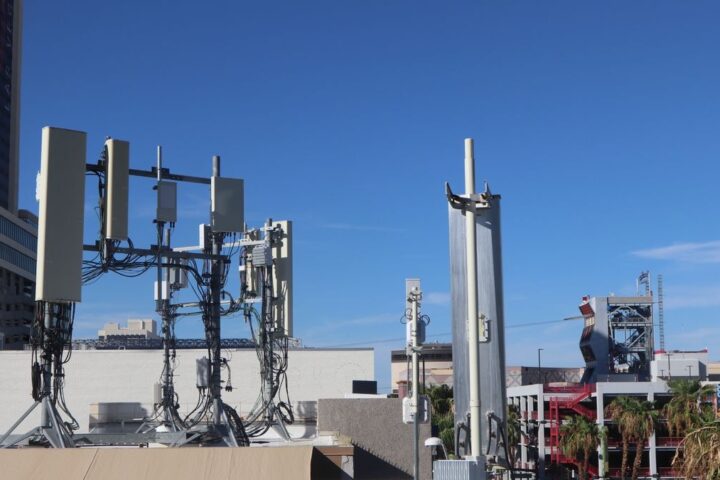


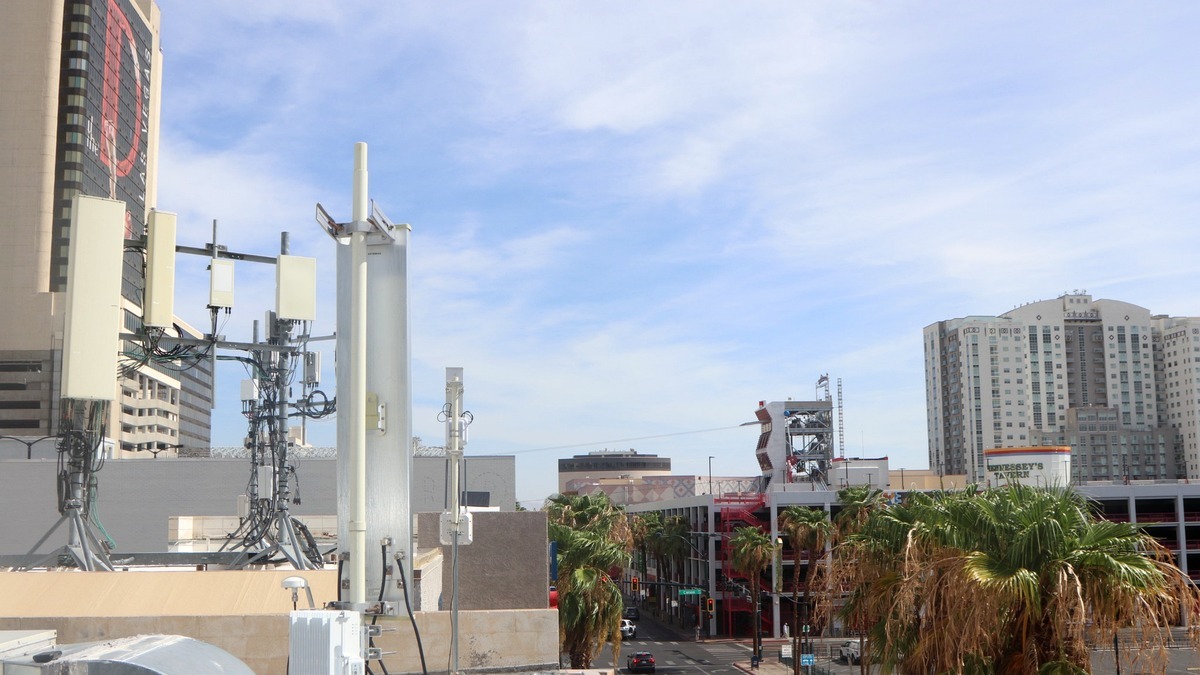
Las Vegas Smart City Corridor Plans eduroam Access as Historic Westside Looks to Digital Future
The privately funded network has supported Passpoint-enabled secure roaming since 2024. Its next goal is to join Nevada’s growing eduroam ecosystem so eligible students and educators can connect automatically beyond campus while free public access remains available.
LAS VEGAS — An eligible UNLV or College of Southern Nevada student can already leave campus and find the same secure eduroam network at City of Las Vegas facilities without searching for another public Wi-Fi password. Operators of a privately funded Las Vegas Smart City corridor now want to extend that kind of seamless student connectivity into their own downtown and Historic Westside coverage.
The proposed next step is not to replace free public Wi-Fi. It is to add eduroam as another secure access layer on infrastructure that project operators say has already supported Passpoint-enabled authenticated roaming since 2024.
That distinction matters. The corridor is not beginning with a conventional hotspot and asking how automatic roaming might work someday. Its operators say compatible mobile-network users are already connecting through Passpoint-enabled pathways, with recent monitoring showing authenticated connections associated with Google Fi, AT&T, T-Mobile and other compatible networks.
Las Vegas already has an eduroam foundation
The idea would build on an education-roaming network that is already established across Southern Nevada.
The Nevada System of Higher Education reported in July 2024 that eduroam was available at all City of Las Vegas facilities. At the time, NSHE said city facilities were averaging about 5,000 unique eduroam visitors a month.
In 2025, NSHE and Clark County announced an expansion to dozens of high-traffic public locations, including the Clark County Government Center, Russell Campus buildings, county parks and other public facilities. In May 2026, NSHE and Washoe County announced 80 additional public locations, bringing Nevada’s statewide eduroam footprint to nearly 350 hotspot locations.
That local context makes the Las Vegas Smart City proposal more concrete. The question is not whether eduroam can exist beyond a college campus. It already does. The question is whether an operating public-benefit connectivity corridor can become part of that same education-roaming environment.
What happens when Wi-Fi stops asking for a password?
Most people experience public Wi-Fi as a series of small interruptions: find the network, accept terms, wait for a captive portal, enter a password or email address, and repeat the process again somewhere else.
The Wireless Broadband Alliance describes OpenRoaming as a federation designed to give cities and public spaces the building blocks for Smart City public Wi-Fi and other public services. The goal is not simply more access points; it is a more secure and seamless way for people to stay connected as they move.
NSHE describes eduroam in similar everyday terms for education users: students, teachers, researchers and staff can connect at participating locations with credentials from their own institution, reducing the need to search for open networks or passwords.
For the Las Vegas Smart City corridor, those ideas create a layered model. Free public Wi-Fi serves the general public. Passpoint and OpenRoaming-compatible access serve compatible authenticated users. eduroam, if approved, could serve eligible students and educators through education credentials.
| Access layer | Who it serves | User experience | Status on corridor |
|---|---|---|---|
| Public Wi-Fi | Anyone in coverage | Select public network and connect | Operating |
| Passpoint / OpenRoaming-compatible access | Compatible enrolled or participating mobile-network users | Automatic authenticated connection where supported | Operating |
| eduroam | Eligible students, faculty, staff and researchers | Automatic secure connection using education credentials | Participation sought |
Why the Historic Westside context matters
The proposed eduroam layer also intersects with a larger neighborhood conversation already underway in the Historic Westside. The city’s HUNDRED Plan, short for Historic Urban Neighborhood Design Redevelopment, was developed as a community-led investment plan for the Historic Westside. The city describes implementation work around identity, economy, housing and civic investments.
Those goals are not separate from internet access. In a neighborhood where families may face housing instability, limited household income or difficulty paying another monthly bill, reliable connectivity can affect whether a student completes homework, whether an adult applies for work, whether a resident can reach public services or whether a family can participate in the digital economy.
Marble Manor’s redevelopment through the Choice Neighborhoods Initiative shows how housing, education and neighborhood investment are already being discussed together in the Historic Westside. The Southern Nevada Regional Housing Authority says the $50 million HUD-backed effort is intended to redevelop Marble Manor and support goals that include educational outcomes and intergenerational mobility for youth and families.
The education link is also visible nearby. The city and the College of Southern Nevada opened the Historic Westside Education and Training Center at 1099 C St., with programs tied to advanced manufacturing, health care, technology, construction trades, digital literacy and workforce preparation. For residents moving between training, work, public services and home, connectivity can become part of the same opportunity corridor.
A student without reliable home internet may have to complete homework on a phone, search for public Wi-Fi or miss digital assignments entirely. An adult without reliable access may struggle to apply for jobs, complete training, schedule services, check benefits or communicate with employers. The Smart City corridor’s public-access layer, secure roaming layer and proposed eduroam participation are designed to make connectivity follow people instead of forcing people to search for it.
National data shows why the homework gap matters
National research supports that concern. Pew Research Center’s 2025 broadband data found that only 54% of U.S. adults in households earning under $30,000 subscribe to home broadband, compared with 94% of adults in households earning $100,000 or more.
Separate Pew research on teens and technology found that 35% of teens in households earning under $30,000 at least sometimes had to use a cellphone for homework. About a quarter of teens in lower-income households at least sometimes could not complete homework because they lacked reliable access to a computer or the internet.
The Las Vegas Smart City project does not claim to solve poverty, housing instability or educational inequality by itself. But project organizers say connectivity can reduce one preventable barrier that can affect homework, training, job searches, communication and access to services.
“We see internet access as prevention infrastructure. A reliable connection can help a student complete homework, help a parent apply for work, help a resident access services and help a family stay connected to opportunity. That is how a Smart City investment becomes a human investment.”
For a student, the difference could be simple
Consider an eligible student whose phone or laptop has already been configured for eduroam through a participating school or college. The student leaves campus, stops at a participating government facility, studies at a community location and later travels through another eduroam-enabled area.
The goal is for the device to recognize the trusted network and reconnect without the student hunting for a new password each time.
If the privately operated corridor is accepted as an eduroam service provider, that same model could potentially extend into supported portions of the downtown and Historic Westside network. The public Wi-Fi would remain available to everyone else.
That layered approach is important to New Hope Foundation International, which has emphasized that public connectivity should remain available without discrimination based on housing status, income or other circumstances.
Other cities show what federated Wi-Fi can become
A global Smart City pattern
Las Vegas would not be inventing the concept of secure credentials following users beyond a single institution or venue.
In Dublin, a Wireless Broadband Alliance OpenRoaming proof of concept allowed users to authenticate once and then move among participating municipal Wi-Fi locations with their devices switching automatically.
In Japan, Cityroam integrated eduroam with OpenRoaming architecture so eduroam users could connect at participating public locations without changing their device configuration. In 2026, WBA also demonstrated a live OpenRoaming experience spanning Tokyo city locations and Tokyo Innovation Base.
Edmonton, Canada, took a parallel education-focused approach by deploying eduroam across 120 city locations, including municipal facilities and its light-rail system.
Those examples do not mean Las Vegas would copy another city’s architecture. They show the larger idea: public connectivity becomes more useful when users can move between trusted networks instead of treating each hotspot as an isolated island.
Free access would remain part of the design
The proposed eduroam layer would not convert the corridor into a student-only network and would not require the general public to have academic credentials.
The existing public network would remain a separate access option for residents, visitors, workers and people who may not have reliable mobile service or home broadband. Passpoint-enabled roaming would continue serving compatible authenticated users, while eduroam could add another identity path specifically for the education community.
In other words, the objective is not one network replacing another. It is several access methods reaching the same underlying infrastructure according to the needs and credentials of different users.
The carrier names describe access, not endorsements
Project operators say monitoring has recorded authenticated connectivity involving compatible Google Fi, AT&T, T-Mobile and other mobile-network users. Those observations describe subscriber access through compatible roaming pathways; they should not be interpreted as an announcement that each named carrier has entered a direct partnership with New Hope Foundation International or Las Vegas News.
Google Fi publicly documents Wi-Fi Auto Connect+, an automatic secure Wi-Fi feature that can connect eligible devices to selected high-quality Wi-Fi networks. The broader Passpoint model is designed so identity and access relationships can be handled through federated systems rather than requiring a separate consumer login at every venue.
What would have to happen next
The immediate next step is procedural, not promotional: determine whether the corridor can participate through Nevada’s existing eduroam service-provider framework and what technical, operational and compliance requirements NSHE would apply.
- Request an eduroam consultation with NSHE System Computing Services and present the existing corridor architecture, coverage model and education-access purpose.
- Confirm service-provider eligibility and whether an outdoor/community corridor can be registered under Nevada’s participation framework.
- Validate the technical path, including enterprise Wi-Fi security, 802.1X, RADIUS/RadSec requirements, logging and SSID design.
- Pilot eduroam on a limited portion of the corridor while maintaining free public Wi-Fi and existing secure-roaming services.
- Measure successful authentications, repeat connections, uptime and student experience before considering broader deployment.
The project is also continuing broader discussions about coverage coordination and potential infrastructure alignment. Those discussions remain exploratory, and no City of Las Vegas funding, ownership arrangement or formal expansion agreement has been announced.
The larger question is becoming less about where Wi-Fi exists and more about whether connectivity can follow people as they move through the city.
For the Las Vegas Smart City corridor, free public access is already one part of that answer. Secure roaming is another. eduroam could become the student-facing layer that connects the network to Nevada’s growing education-roaming ecosystem and to the Historic Westside’s broader education, workforce and housing-investment goals.
Sources and context
This report is based on public records, official agency materials, technical documentation and project information provided by the Las Vegas Smart City corridor operators. Source links are included throughout the article and listed below for transparency.
- Wireless Broadband Alliance: OpenRoaming Smart Cities
- Wireless Broadband Alliance: How OpenRoaming Works
- NSHE System Computing Services: eduroam in Nevada
- NSHE: eduroam in City of Las Vegas facilities
- NSHE: Clark County eduroam expansion
- NSHE: Washoe County expansion and statewide hotspot count
- City of Las Vegas: HUNDRED Plan
- Southern Nevada Regional Housing Authority: Marble Manor Choice Neighborhood Initiative
- City of Las Vegas: Historic Westside Education and Training Center
- Pew Research Center: Internet use, home broadband and digital divides
- Pew Research Center: Teens, homework and technology access
- Google Fi: Wi-Fi Auto Connect+
- Wireless Broadband Alliance: Cityroam, eduroam and OpenRoaming in Japan
- Wireless Broadband Alliance: Dublin Smart City OpenRoaming trial
- Wireless Broadband Alliance: Tokyo OpenRoaming demonstration
- eduroam: City of Edmonton citywide deployment