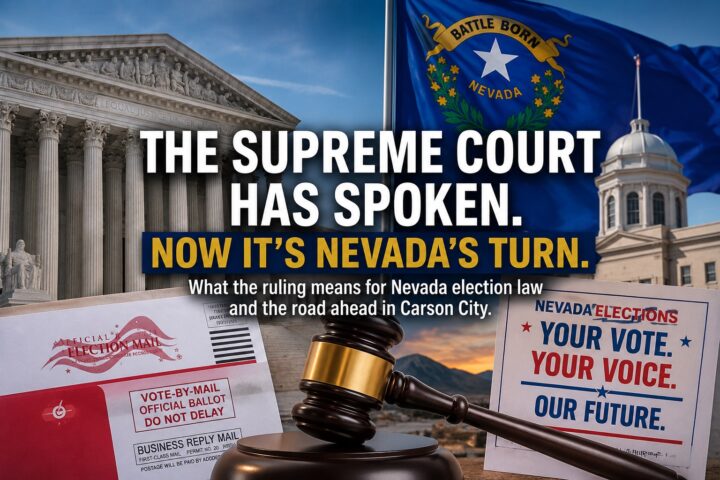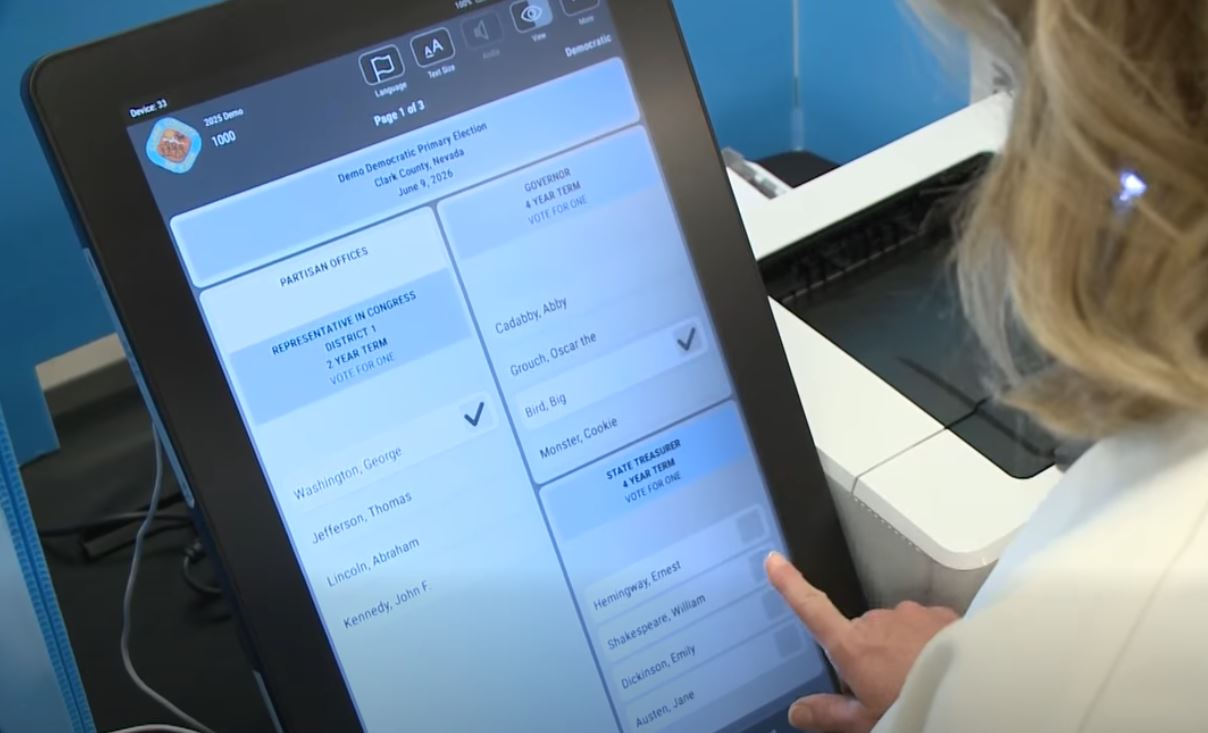


This week, Nevada Secretary of State Cisco Aguilar won a legal battle against the federal government’s effort to obtain Nevada’s unredacted voter-registration records. U.S. District Judge Anne R. Traum dismissed the Department of Justice’s lawsuit seeking the complete voter file.
Winning a lawsuit is not the same thing as solving the underlying problem.
Aguilar has cast the fight as a defense of Nevadans’ private information. Under Assistant Attorney General for Civil Rights Harmeet Dhillon, the DOJ has brought similar actions against numerous states, framing the issue differently: whether states are maintaining accurate voter rolls and whether the DOJ can independently verify compliance with federal election law.
That concern is not novel. The Help America Vote Act requires states to maintain a computerized statewide voter-registration list and establishes requirements governing the accuracy and maintenance of those records.
Privacy and Voter-List Verification
Nevadans’ privacy interests are real. The DOJ sought Nevada’s complete voter-registration file, including sensitive identifiers such as driver’s-license numbers and partial Social Security numbers—information Nevada law treats as confidential and does not make available to the general public. The public doesn’t need that information. Political organizations don’t need it to mobilize. Random members of the public certainly do not need it.
But the DOJ was not asking Nevada to publish those confidential identifiers. It sought the information directly from the state for federal election-law enforcement and voter-list verification purposes. Labeling information nonpublic does not, by itself, answer the separate policy question of whether certain identifying data can or should be shared between government agencies under appropriate safeguards. That distinction matters.
It matters even more after the Department of Homeland Security claimed in a preliminary review that as many as 15,903 potential noncitizens could appear on Nevada’s voter rolls. That figure should not be accepted as established fact. Aguilar has appropriately demanded the underlying identities, data sources and methodology so Nevada can independently evaluate the claim.
He is right. Reliable verification requires reliable data. But that principle cannot operate in only one direction.
If Aguilar cannot evaluate the federal government’s claims without sufficient underlying information, how can federal agencies reliably compare their records against Nevada’s voter rolls without sufficient identifying information from Nevada?
Nevada’s Voter-Roll Challenges
Nevada presents real challenges for voter-list maintenance. It has universal mail ballots and a highly mobile population. Census data indicate that roughly one in seven Nevadans had moved within the prior year. People move across town and across state lines constantly. That’s not a criticism of Aguilar’s office—it’s a description of the job.
Potential database matches do not establish that someone is ineligible to vote—they identify records requiring further review. People share names. Addresses change. People naturalize. Government databases contain errors. Accurate identifying information is what separates meaningful verification from guesswork.
If Secretary Aguilar believes Nevada’s voter rolls are accurate, why oppose a process capable of independently confirming it while protecting sensitive information?
Privacy and Election Integrity Can Coexist
Privacy and election integrity aren’t opposing values. Two things can be true at once. Nevada can protect sensitive voter information from the general public while establishing appropriate government-to-government verification mechanisms, regularly comparing voter records against reliable eligibility information, and providing notice and due process before removing anyone from the rolls.
Judge Traum’s decision resolved whether the DOJ could compel Nevada to turn over the unredacted voter file it sought through the legal theory presented in its lawsuit. But Aguilar’s own criticism of DHS illustrates the unresolved practical problem: you cannot verify what you cannot reliably compare.
Nevada won the lawsuit. The question Secretary Aguilar still hasn’t answered is how Nevada will provide both privacy and meaningful verification.
Safeguarding elections requires both.
Editorial Note: This article is a guest opinion submitted exclusively to Las Vegas News. The views and opinions expressed are those of the author and do not necessarily reflect the editorial position of Las Vegas News. Guest submissions are reviewed for factual accuracy, sourcing and compliance with Las Vegas News editorial standards prior to publication.
Contribute to Las Vegas News
Have expertise on an issue affecting Las Vegas?
Las Vegas News welcomes thoughtful guest contributions from professionals, community leaders, and subject-matter experts.
Submit a Guest ArticleHelp other readers find trusted local news
A short review helps Las Vegas readers discover fact-based reporting and supports independent local journalism.