


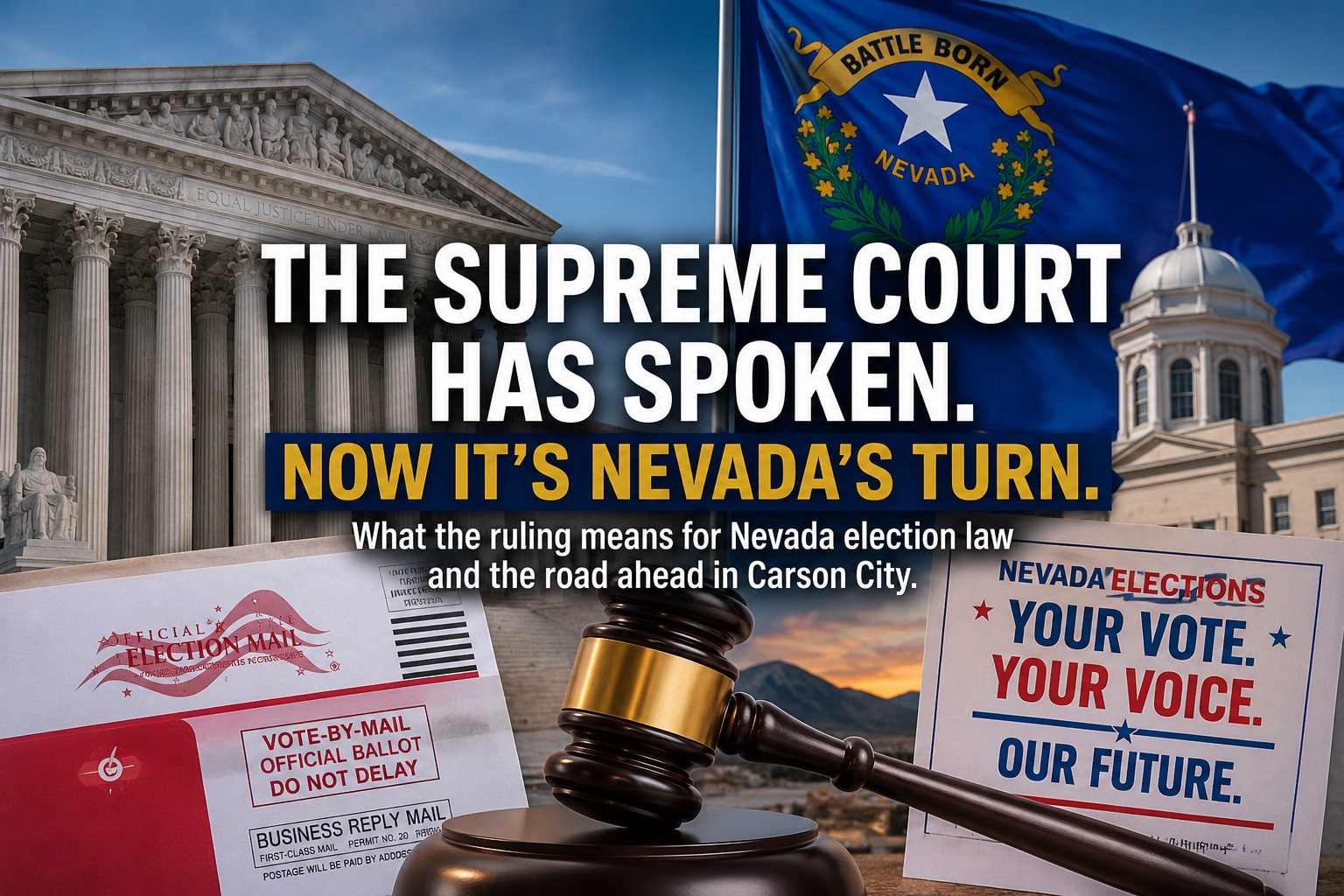
The Supreme Court may have closed the courthouse door, but it opened the door to a renewed debate over Nevada’s election laws in Carson City.
In 2021, Nevada lawmakers passed Assembly Bill 321, transforming what had been COVID-19 emergency-era election procedures into permanent law. The legislation established universal mail ballots for active registered voters and permitted ballots postmarked by Election Day to be counted if they arrive up to four days later.
The election laws adopted during an unprecedented public health emergency should not be immune from reconsideration years after that emergency has ended.
This week, the U.S. Supreme Court issued its decision in Watson v. Republican National Committee, one of the most closely watched election law cases in years. While many expected the Court to impose a nationwide rule requiring ballots to be received by Election Day, it instead concluded that existing federal law does not prohibit states from counting certain ballots that arrive afterward.
Regardless of whether one agrees with the Court’s decision, it makes one thing clear: if Nevada wants different election rules, the solution will not come from Washington. It will come from Carson City.
As an election attorney, I’ve spent my career helping candidates navigate some of the most consequential moments in our electoral process—from overseeing Election Day legal operations and responding to election-related issues in real time to preparing for recounts and post-election disputes. Those experiences have taught me that every vote matters—but so does every day of uncertainty after the polls close. Delayed election results don’t just affect campaigns. They affect candidates preparing to govern, election officials administering our elections, and voters waiting for finality.
Nevada now automatically mails a ballot to every active registered voter, and under current law, timely postmarked mail ballots may continue arriving and being counted for up to four days after Election Day. Supporters argue these policies maximize voter access and reduce barriers to voting. Critics counter that they prolong uncertainty, delay final election results, and diminish public confidence that Election Day actually marks the conclusion of the election.
But after the Supreme Court’s decision, that policy debate now belongs squarely before the Nevada Legislature.
Nevada has become accustomed to waiting days before the outcome of close races becomes clear. That uncertainty has become part of our election process, but it should not simply be accepted as inevitable. We need only look west to California, where election officials are still counting ballots from the June 2 primary — weeks after Election Day. Nevada should decide whether that is the model it wants to follow.
The Supreme Court did not answer whether Nevada’s current election laws are good policy—it wasn’t asked to. Instead, it clarified that this is largely a question for state lawmakers unless Congress chooses to act differently.
Election Day should mean Election Day
While every eligible voter should have a meaningful opportunity to cast a ballot, voters also deserve timely, definitive election results.
Washington has spoken — and left the question to the states. The future of Nevada’s elections now rests with the Governor and Legislature that Nevadans elect this November. The lawmakers they choose, together with the Governor, will determine whether Nevada’s COVID-era election policies remain in place or whether it’s time to chart a different course. Voters should know where every candidate stands before they cast their ballots.
Contribute to Las Vegas News
Have expertise on an issue affecting Las Vegas?
Las Vegas News welcomes thoughtful guest contributions from professionals, community leaders, and subject-matter experts.
Submit a Guest Article






Great news
More updates