


Peru Travel Review: Machu Picchu, Lima Cuisine and a Demanding Journey
A seven-day journey through Lima, Cusco, the Sacred Valley and Machu Picchu delivered extraordinary history and cuisine—but also altitude, steep terrain, long transfers and unexpected physical demands.
After one canceled attempt, a 20-hour journey and a traffic-clogged arrival in Lima, we finally made it to Peru.
Help other readers find trusted local news
A short review helps Las Vegas readers discover fact-based reporting and supports independent local journalism.
Our first trip, scheduled for July 2024, was canceled during a major worldwide technology outage that disrupted airlines and airports. This time, we arrived with two principal goals: to experience the ancient Inca site of Machu Picchu and to determine whether Lima deserved its growing reputation as one of the world’s leading culinary destinations.
Over seven days, our group traveled through Lima, the Sacred Valley, Cusco and Machu Picchu using buses, trains and domestic flights. The itinerary delivered extraordinary history, memorable meals and striking landscapes, but it also required considerably more physical endurance than a typical sightseeing vacation.
At a glance
- Destinations: Lima, the Sacred Valley, Cusco and Machu Picchu
- Trip length: Seven-day guided tour
- Major highlights: Peruvian cuisine, Inca sites and Andean culture
- Primary challenges: Altitude, steep terrain, early departures and lengthy transfers
- Best suited for: Active travelers comfortable with demanding itineraries
- Contributor’s verdict: Difficult, educational and worthwhile
The trip was arranged through South America Tours, a Trafalgar partner in Peru. Our group of approximately 30 travelers included Americans, Canadians, Australians and Filipinos. Because English was not widely spoken in several places we visited, the quality of our English-speaking guide proved essential.
First Impressions of Lima
Lima sits along the Pacific Ocean in Peru’s arid coastal region. The country also includes the Andes highlands and a vast section of the Amazon rainforest.
A substantial portion of Peru’s population lives in metropolitan Lima, and the city’s size was immediately apparent. Congestion began near the airport and continued through parts of the central city.
Our first tour focused on Lima’s historic center and surrounding areas. Much of the older urban landscape appeared heavily worn, with aging infrastructure, congested roads and numerous buildings that seemed unfinished.
Our guide explained that some property owners leave construction incomplete because they lack the capital to finish projects or because unfinished buildings may be treated differently for tax purposes. I did not independently verify that explanation, but unfinished construction was certainly a visible feature of the city.
The districts of San Isidro and Miraflores presented a different side of Lima. These neighborhoods were more polished, walkable and commercially active, with upscale residences, hotels, restaurants and retail establishments.
The Peruvians we encountered were consistently polite and welcoming. Our guides advised us that the principal tourist areas on our itinerary were generally safe, although travelers should exercise the same awareness they would in any major city.
Minerals, Development and Peru’s Economic Future
During the trip, our guide discussed the importance of Peru’s mineral resources and the disputes that can arise when mining companies seek access to land occupied by indigenous communities.
He said foreign investment in the sector has shifted over time, with Chinese companies taking a growing role alongside companies from North America and elsewhere.
The issue raises difficult questions about development, land rights, compensation and infrastructure. Peru possesses tremendous natural wealth, but its long-term benefit will depend on how effectively that wealth is managed and whether affected communities share meaningfully in the economic gains.
Mining companies operating in developing regions should be expected not only to compensate communities fairly but also to contribute to roads, utilities and other infrastructure that can support long-term growth.
A Long and Layered History
Peru’s history extends far beyond the Inca Empire.
Our guides described a succession of indigenous societies that developed along the coast and in the Andes over thousands of years. The Inca civilization emerged relatively late in that broader history, expanding rapidly before the arrival of Spanish forces in the 16th century.
At its height, the Inca Empire extended beyond present-day Peru into territory now belonging to Ecuador, Bolivia, Colombia, Chile and Argentina.
Spanish explorer Francisco Pizarro arrived in 1532, beginning a colonial period that continued until Peru declared independence in 1821. Conquest, colonization and religious conversion resulted in the destruction or loss of significant portions of the historical record.
Our guide also discussed the relationship among climate conditions, food supplies and political instability. He suggested that extreme weather events, including strong El Niño cycles, may have contributed to social disruption during different historical periods.
Whether every interpretation offered during the tour can be conclusively verified, the central lesson was clear: Peru’s civilizations developed in a physically demanding environment shaped by mountains, deserts, earthquakes and dramatic variations in climate.
Lima’s Culinary Reputation
One of the most anticipated parts of the trip was an introduction to Lima’s food culture.
During our city tour, we met chef Ignacio Barrios, who has operated restaurants and appeared on television. He guided us through a local market before hosting a cooking demonstration and lunch at his Urban Kitchen.
I told him I was skeptical of claims that Lima had become the culinary capital of the world. He responded by identifying three factors behind Peru’s rise as a major gastronomic destination.
The first was cultural fusion. Peruvian cooking reflects indigenous, Spanish, African, Chinese and Japanese influences. Those traditions have combined over generations to produce dishes built around seafood, fish, chicken, beef, pork, vegetables, grains and native peppers.
The second was geography. Peru contains an extraordinary range of elevations, climates and growing conditions. Its cold Pacific waters, coastal desert, Andes highlands and Amazonian regions produce a wide variety of seafood, fruits, vegetables and other ingredients.
The third was national investment. According to Barrios, public institutions and private businesses have spent decades promoting culinary education, professional training and Peruvian cuisine as part of the country’s national identity.
That combination of cultural diversity, agricultural variety and sustained promotion has helped transform Lima into an international dining destination.
Pisco Sours and Classic Peruvian Dishes
During the demonstration, Barrios taught us how to prepare a pisco sour, Peru’s best-known cocktail.
Pisco is a grape-based spirit associated with both Peru and Chile, and its origins remain a source of national rivalry. Our hosts, unsurprisingly, strongly defended Peru’s claim.
Lunch featured two classic dishes: lomo saltado and ají de gallina.
Lomo saltado combines beef, onions and tomatoes in a preparation influenced by Chinese-Peruvian cooking. Ají de gallina is a creamy chicken dish flavored with a mild yellow pepper. Both were excellent and remained consistently enjoyable when we encountered them elsewhere during the trip.
I had previously eaten a version of lomo saltado at a Peruvian restaurant in Las Vegas, and I was pleased to find that it compared favorably with what we were served in Peru.
Later in the week, we ate at Alfresco in Miraflores, where we had seafood ceviche and paiche, a large freshwater fish from the Amazon basin. The meal, including coffee and dessert, was excellent and surprisingly affordable by major U.S. city standards.
Peru ultimately persuaded me that its culinary reputation is deserved—not merely because of individual dishes, but because of the way regional ingredients and cultural traditions are brought together.
Not every meal was remarkable. Some of the fruit we sampled was less sweet than expected, and many baked goods were ordinary. Considering the country’s agricultural diversity, I was also surprised that our limited tour meals did not feature a broader selection of native produce.
A one-week guided itinerary, however, cannot possibly represent the full range of Peruvian cuisine.
From Lima to the Sacred Valley
On the second day, we flew from Lima to Cusco, which sits at more than 11,000 feet above sea level, and then traveled by bus into the Sacred Valley.
At one point, we visited an indigenous community at an elevation approaching 13,000 feet. There, we saw llamas, alpacas, vicuñas and guanacos—animals closely associated with the Andes.
We were told that genuine alpaca or vicuña fibers tend to feel cool to the touch, while synthetic acrylic imitations often do not. Travelers purchasing expensive textiles should seek additional authentication rather than relying on a single informal test.
The community prepared lunch using a traditional earth-oven technique. Food was placed in a pit with heated stones and insulating vegetation. The meal included trout, chicken, pork and vegetables, accompanied by avocado dip, mango ceviche and fresh salsa.
We also sampled guinea pig, a traditional Andean food. It was not especially popular with our tour group, but trying it provided a direct connection to the region’s culinary customs.
During the meal, local musicians performed traditional flute music, including “El Cóndor Pasa,” a composition known internationally through Simon & Garfunkel’s 1970 recording.
At another village later in the tour, we tasted a fermented corn drink. It was flavorful and stronger than expected.
The Ingenuity of the Inca World
The more we learned about Inca civilization, the more remarkable its achievements appeared.
Quechua remains one of the principal indigenous languages associated with the Inca world and is still spoken in Peru and neighboring countries.
Our guide described the Incas as systemic thinkers who organized society by understanding the relationship among agriculture, climate, engineering, religion and political authority.
Their accomplishments can still be seen in stone construction, terraced agriculture, road systems, food storage and water management.
Many surviving structures demonstrate sophisticated earthquake-resistant design. Walls were built with carefully fitted stones that could withstand movement more effectively than rigid construction.
The Incas also developed agricultural terraces that improved drainage, reduced erosion and made cultivation possible on steep mountain slopes. Storage facilities used altitude and airflow to preserve food.
Their knowledge extended to astronomy, metallurgy and plant-based medicine. Our guides described a tradition in which plants were used for healing, ceremony and spiritual practice.
Some of the more specific claims we heard—including explanations involving reproductive health, marriage customs, adoption practices and the interpretation of human sacrifice—would require further scholarly verification. Tour narratives can combine established evidence, local tradition and modern interpretation.
The physical evidence, however, speaks for itself. The ability to cut, transport and assemble immense stones with extraordinary precision remains one of the most impressive features of Inca construction.
Ollantaytambo, Sacsayhuamán and Machu Picchu
We visited three major Inca sites: Ollantaytambo, Sacsayhuamán and Machu Picchu.
Ollantaytambo contains monumental stonework, agricultural terraces and an urban layout that still shapes the modern town.
Sacsayhuamán, overlooking Cusco, is known for enormous stones fitted together in sweeping walls. Some blocks weigh many tons, yet they were placed with remarkable precision.
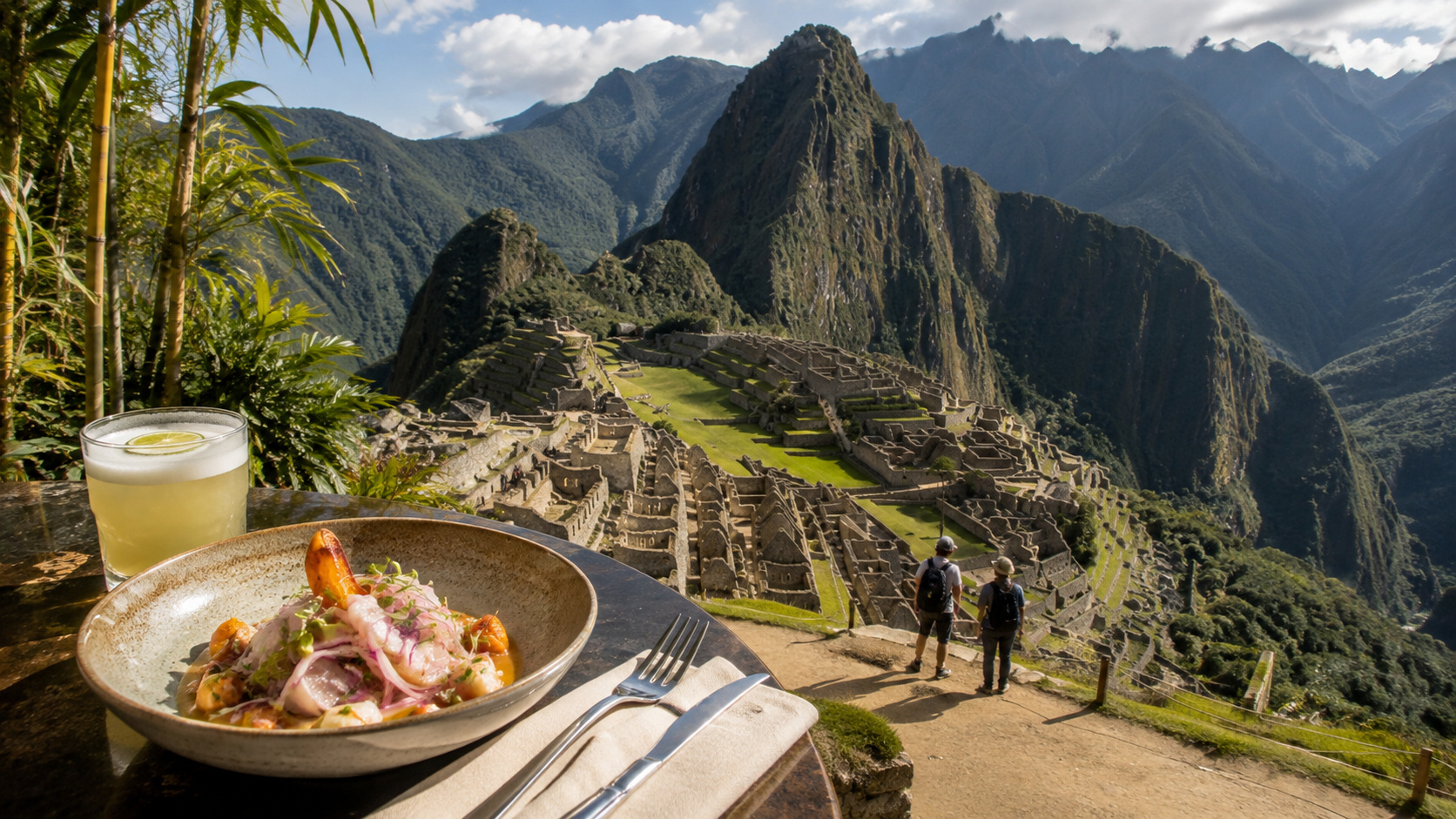
Machu Picchu is the best known of the three and the unquestioned centerpiece of most tours to Peru.
Built during the 15th century, the site became internationally famous after Hiram Bingham brought broad attention to it in 1911. Local residents knew of the site before Bingham’s arrival, so describing him simply as its “discoverer” can obscure the role of indigenous knowledge.
We reached the area aboard the Vistadome train and entered Machu Picchu using one of the established visitor circuits.
Our route took approximately two and a half hours. Tickets for the most popular circuits can sell out well in advance, so reservations should be made early.
Machu Picchu Is Physically Demanding
Photographs do not fully communicate how physically demanding the visit can be.
The route includes narrow passages, uneven stone surfaces, steep inclines and irregular steps. Handrails are limited or absent in many places.
Visitors should realistically assess their mobility, balance and cardiovascular condition before attempting the more demanding circuits. Altitude can add to the strain, particularly for travelers arriving from lower elevations.
Our guide warned us that umbrellas were restricted at the site and described a past lightning incident. I did not independently confirm that specific event, but rain would unquestionably make the stone paths more difficult and potentially hazardous.
Anyone planning the trip should carry appropriate rain protection, wear shoes with reliable traction and prepare for rapidly changing mountain weather.
I am glad I completed the visit, but I would not approach it casually or recommend it without clearly explaining the physical requirements.
Before booking a Machu Picchu tour
- Ask which visitor circuit is included in the package.
- Confirm how much stair climbing and uneven terrain the itinerary involves.
- Discuss altitude concerns with an appropriate medical professional.
- Reserve Machu Picchu access well in advance.
- Wear shoes with reliable traction and ankle support.
- Carry rain protection that complies with current site rules.
- Confirm hotel and transportation accessibility directly.
- Keep your passport secure but readily available.
- Do not assume U.S. accessibility standards apply abroad.
Cusco: Inca Foundations and Spanish Colonialism
After Machu Picchu, we explored Cusco.
The city sits at an elevation of roughly 11,000 feet and preserves layers of both Inca and Spanish colonial history.
Inca stone foundations remain visible beneath churches and other colonial structures. Spanish authorities frequently built religious buildings on or near sacred indigenous sites, creating a physical record of conquest and cultural replacement.
Inside one of Cusco’s major churches, we saw a locally interpreted painting of the Last Supper in which a roasted guinea pig appears as the central dish. The work demonstrates how European religious imagery was adapted to an Andean cultural setting.
Cusco also offered a growing specialty-coffee scene. At Three Monkeys Coffee, visitors could select coffee associated with different growing elevations. The concept may have been marketed enthusiastically, but the coffee itself was good.
Hotels: Service Often Exceeded the Facilities
The hotel accommodations were adequate but not among the strongest parts of the trip.
Our hotel in Miraflores was described as a luxury property, although its physical condition and amenities did not match what many American travelers might expect from a comparable rating in the United States.
At El MaPi near Machu Picchu, the food was good, but the accommodations were basic and some plumbing and accessibility issues were noticeable.
Multiple staircases, uneven pathways and limited railings were common throughout the trip. Travelers with mobility limitations should not assume that hotels, restaurants or attractions will meet the accessibility standards required in the United States under the Americans with Disabilities Act.
That does not necessarily mean the properties are operating unlawfully under Peruvian standards. It means American travelers must avoid assuming that U.S. accessibility rules apply abroad.
We also stayed at a Sonesta property converted from a monastery. The accommodations were austere, but the food was enjoyable.
The Novotel in Cusco, located in a restored colonial building, offered the best overall combination of accommodations and food during our tour.
For adventurous travelers, the Sacred Valley is also home to the Skylodge Adventure Suites, transparent capsules suspended on a mountainside. Guests must climb to reach the accommodations and may depart by zip line. It is less a hotel than an extreme-adventure experience.
This Was Not a Relaxing Vacation
Prospective travelers should understand that this itinerary is demanding.
A significant portion of the week was spent moving between cities, hotels, stations, airports and attractions. Travel required buses, trains, flights and transfers to smaller vehicles capable of navigating narrow roads.
Many days began before sunrise.
We walked on steep cobblestone streets, climbed irregular stairs, carried daypacks, adjusted to high altitude and prepared for sun, cold, rain and insects.
Restroom conditions varied considerably. Some lacked toilet seats, toilet paper or other amenities American travelers may take for granted.
Tap water was not recommended for drinking, so bottled or purified water had to be carried and replenished regularly.
Passports were repeatedly required for transportation and admission. Keeping travel documents secure but readily accessible was essential.
At times, the experience felt more like an endurance exercise than a conventional vacation. Travel companies should state these realities more clearly in their marketing materials so customers can make informed decisions.
The Value of an Excellent Guide
Our tour guide, Daniel Peleaz, made the journey worthwhile.
Born and raised in Cusco, he had approximately 25 years of experience and handled the logistical demands of the trip with patience and professionalism.
More importantly, he used the long hours on buses and trains to explain Inca history, contemporary Peruvian life and regional customs.
Without a knowledgeable guide, much of the travel time would have felt wasted. With him, the movement between destinations became part of the education.
For a trip this complicated, a guide is not merely someone who points out landmarks. The guide must coordinate transportation, manage schedules, explain unfamiliar customs, respond to altitude or health concerns and help travelers understand what they are seeing.
Choosing the right guide may be as important as choosing the itinerary.
Airline Travel Added to the Fatigue
The journey to and from Peru reinforced many of my concerns about modern airline service.
Seats and restrooms continue to become less comfortable, carry-on baggage rules are inconsistently enforced and food service on long flights can be disappointing.
Airport construction, poor signage and unintelligible announcements created additional frustration. None of these problems was unique to Peru, but they increased the fatigue of an already demanding trip.
The bottom line
Peru is an exceptional destination for travelers interested in archaeology, cuisine and Andean culture. However, a multi-city guided itinerary involving Machu Picchu can require substantial walking, altitude adjustment, early departures and long transfers. Prospective visitors should evaluate the itinerary carefully rather than treating it as a conventional relaxing vacation.
A Challenging but Worthwhile Journey
Peru offers a rare combination of ancient history, dramatic geography and sophisticated cuisine.
Machu Picchu is as extraordinary as its reputation suggests. The stonework at Ollantaytambo and Sacsayhuamán reveals engineering achievements that remain impressive centuries later. Lima’s restaurants demonstrate how cultural fusion and regional ingredients can create a distinctive national cuisine.
The journey, however, requires substantial preparation.
Travelers should expect altitude, uneven terrain, long transfers, early departures, changing weather and limited accessibility. They should pack carefully, assess their physical abilities honestly and work with an experienced guide.
This was not a relaxing vacation. It was an educational expedition through a country whose ancient civilizations accomplished remarkable things in one of the world’s most challenging environments.
The effort required to reach and explore these places may ultimately deepen one’s appreciation for the people who built them.
For travelers prepared for the demands, Peru can be difficult, surprising and unforgettable.
Contribute to Las Vegas News
Have expertise on an issue affecting Las Vegas?
Las Vegas News welcomes thoughtful guest contributions from professionals, community leaders, and subject-matter experts.
Submit a Guest Article