

Election Integrity in Nevada Starts With Knowing the Rules
An incident at a single polling place can reach far beyond the voters who witnessed it. Within minutes, a photo, video or allegation can be shared across Nevada and around the country. A genuine violation deserves prompt attention. But when an account lacks context or describes lawful activity as misconduct, it can also create confusion and erode confidence in an election.
That’s why understanding the rules is essential for election integrity. Voters, campaigns and observers should know how to recognize and report potential violations and how to distinguish them from conduct Nevada law permits. Both are necessary to protect the right to vote and maintain confidence in the process.
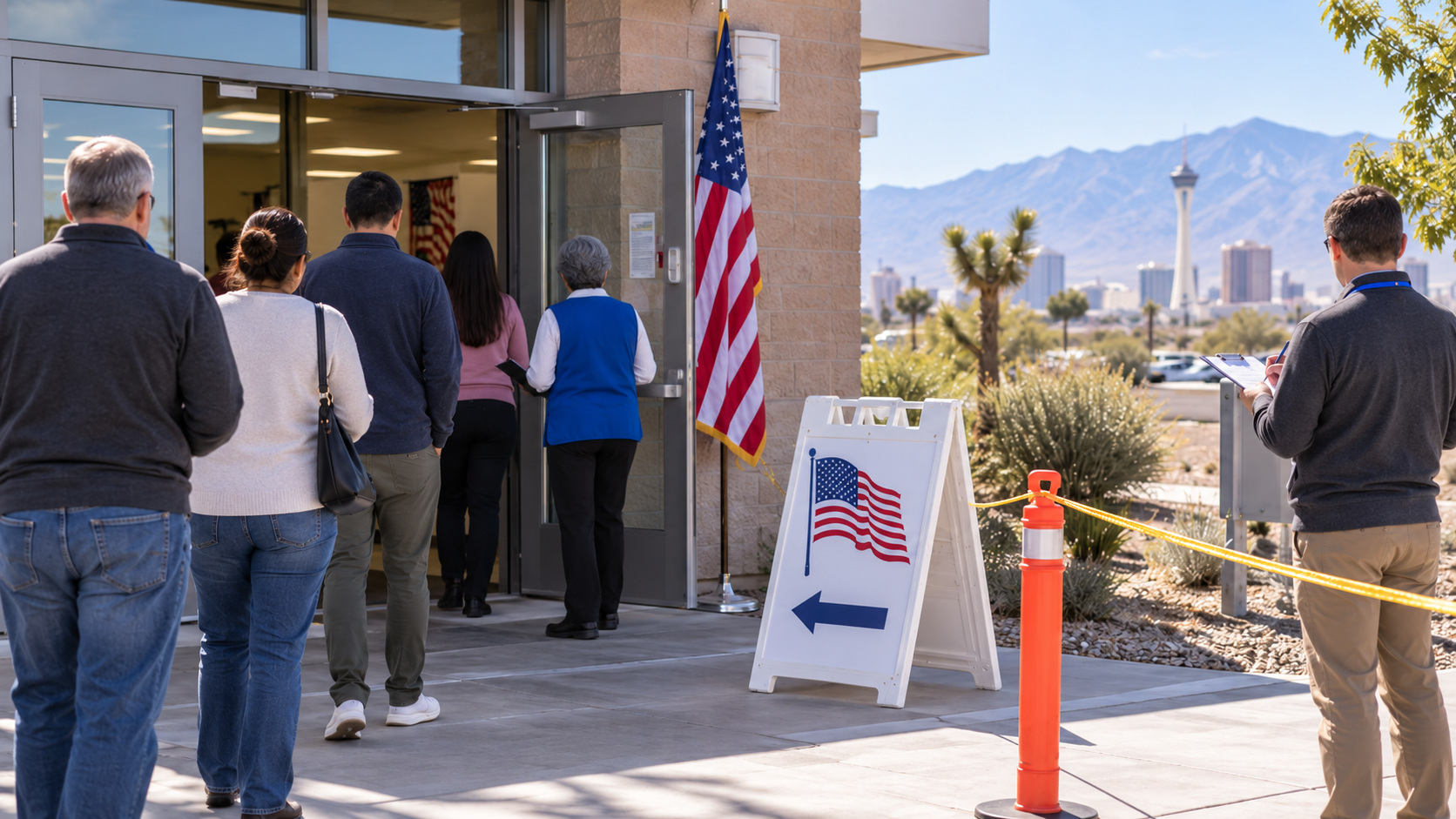
Consider the rules on campaigning near polling places. Nevada law generally prohibits electioneering inside polling places and within a surrounding 100-foot zone. During early voting, that distance is measured from the entrance to the voting area. On Election Day, it is measured from the entrance to the building housing the polling place, with an exception for conduct in a private residence or on commercial or residential property within that distance. Look for posted distance markers and ask a poll worker if the boundary is unclear.
The boundary protects voters from campaign activity as they enter to cast their ballots. Electioneering includes more than asking someone to vote for a candidate. Campaign signs, literature and insignia expressly referring to a political party, candidate or ballot question in that election fall within the prohibition. Voters should avoid wearing such insignia within the restricted area. Nevada law also provides that a person should not be prevented from voting solely because they are wearing a prohibited political insigne that they are reasonably unable to remove or cover.
At the same time, seeing a campaign volunteer or sign near a polling place does not automatically mean a violation has occurred. Outside the 100-foot boundary, campaigning is generally permissible, but private-property rules still matter. At voting sites on private property, such as supermarkets and shopping centers, campaigns and volunteers must obtain the owner’s permission before electioneering or gathering petition signatures on the property. Simply standing beyond the posted distance markers does not authorize campaigning in the parking lot. Peaceful political advocacy remains a core First Amendment freedom.
Questions about food and water distribution at voting sites also require attention to the facts. Nevada’s election statutes do not contain a blanket prohibition on offering refreshments to people waiting to vote, but distribution must comply with electioneering restrictions and property rules. Refreshments cannot be offered as payment or a reward for registering to vote, voting, or supporting a particular candidate.
Nevada law also protects voters from intimidation and coercion. Using or threatening force, intimidation, coercion or undue influence in connection with an election is a felony.
Public observation is another part of the process that can be misunderstood. Members of the public may observe voting from designated areas, subject to rules protecting voter privacy and preventing interference. Observation can help the public understand how elections are conducted, but it carries responsibilities. Observers must sign the required acknowledgment and wear a name tag showing their full name. While observing, they may not talk to voters inside the polling place, use a cell phone or computer there, advocate for candidates, political parties or ballot questions, argue about or challenge election personnel’s decisions, or interfere with voting. Observers who violate these rules may be removed by the county or city clerk.
Voters should also think twice before snapping a selfie at the polls. Nevada prohibits members of the general public from photographing or making audio or video recordings of the conduct of voting at a polling place, even when no ballot selections are visible. A limited exception covers journalists working for specified news outlets acting solely in their professional capacity. Save the celebratory “I Voted” photo for outside, while respecting other voters’ privacy.
When someone witnesses a possible violation, the most productive first step is to alert the polling-place supervisor or county election office so an ongoing problem can be addressed.
Potential election-law violations can also be reported through the Nevada Secretary of State’s website. The details matter. Provide the location, time and specific conduct observed, distinguishing firsthand observations from information supplied by others. Preserve evidence while respecting voter privacy and recording restrictions. If there is an immediate threat of violence, call 911.
Nevadans have every reason to expect election laws to be followed and enforced consistently. A violation left unaddressed can undermine confidence in the process and so can an allegation repeated without the facts needed to evaluate it. As Election Day approaches, we can all contribute by learning the rules, respecting one another’s rights and promptly reporting specific concerns. That is how we protect the opportunity to vote and strengthen confidence in the process.
Contribute to Las Vegas News
Have expertise on an issue affecting Las Vegas?
Las Vegas News welcomes thoughtful guest contributions from professionals, community leaders, and subject-matter experts.
Submit a Guest Article