

 MIT News - Artificial intelligence0 followersVerified
Stay connected and personalize your Newswire experience.
MIT Schwarzman College of Computing launches pilot to help educators teach AI across disciplines
- Publisher
- MIT News - Artificial intelligence
- Topic
- Special events and guest speakers
- Location
- Massachusetts, US
- Published
- Sep 9, 2026 · 8:40 PM
Las Vegas Newswire preserves the publisher's attribution and original-source link while adding publisher, topic and related-coverage navigation for readers.
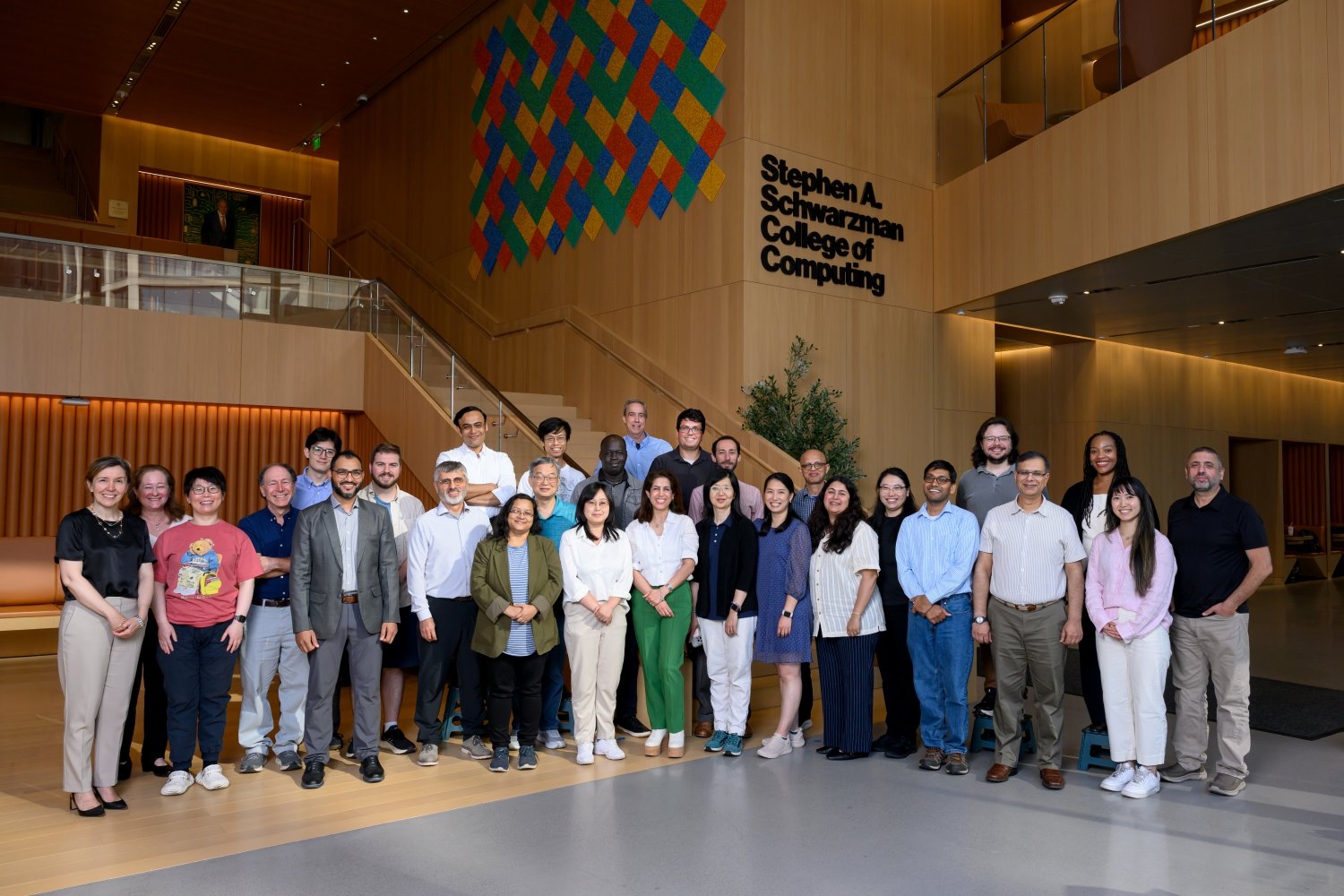
This summer, the MIT Schwarzman College of Computing welcomed faculty from colleges and universities across Greater Boston, South Carolina, West Virginia, and Texas to campus for the inaugural AI Educators Pilot, a weeklong workshop aimed at expanding how artificial intelligence is taught across disciplines and learning environments.
Inspired by MIT class C01/C51 (Modeling with Machine Learning), a course developed through the Common Ground for computing and AI education that focuses on helping students understand and apply foundational AI and machine learning concepts to problem-solving in their own disciplines, the workshop gave educators an opportunity to explore how its materials and teaching methods could be adapted for their classrooms.
“The broader goal is to expand AI education to more students by investing in training for instructors,” says Dan Huttenlocher, dean of the MIT Schwarzman College of Computing and the Panasonic Professor of Electrical Engineering and Computer Science (EECS).
“We want to empower students to become critical thinkers about AI, not just users of the technology,” says Asu Ozdaglar, deputy dean of academics for the MIT Schwarzman College and department head of EECS.
A collaborative model for expanding AI education
Bringing the program to life required broad collaboration across the college, including support from leadership, staff, and contributions from more than half a dozen instructors in fields ranging from finance and computer science to sustainability. Together, they helped shape a workshop that paired core technical concepts with examples and teaching materials adaptable to a range of classroom settings.
“I have not seen an effort quite like it — this many dedicated instructors assembling materials of this richness, all to equip the educators who serve their students,” says Saurabh Amin, the Edmund K. Turner Professor in Civil Engineering and faculty director of the AI Educators Pilot. Amin is also co-director of the Operations Research Center, which is jointly housed within the MIT Schwarzman College of Computing and MIT Sloan School of Management.
With support provided by Jake and Robin Reynolds, the pilot brought together 19 participants in July from Allen University, Babson College, Brandeis University, Marshall University, the University of Massachusetts at Lowell, the University of North Texas, and Wentworth Institute of Technology. Working alongside MIT faculty and instructors, participants explored the pedagogy behind Modeling with Machine Learning through a mix of demos, videos, and exercises, and collaborated in hands-on activities focused on translating the course’s materials and methods to their own classrooms.
“This opportunity has been very timely because we are starting an AI and data science program in my department,” says Wenjin Zhou, assistant professor of computer science at UMass Lowell. “We’ve already been thinking about: How do we teach our next generation of computer scientists within the area of AI? How do we integrate AI in the teaching? I wanted to learn more about how other people are doing it, and especially answer the question: If AI can create tools for anyone now, what does a computer scientist do?”
Moving beyond the black box
When it comes to AI, Amin notes, there is no shortage of high-quality material. What is usually missing is context: Opportunities for instructors and students to connect AI concepts to specific disciplines, problems, and ways of thinking. Those connections are often built through dialogue and reasoning, rather than by presenting AI as a fixed set of ideas to be received. But instructor capacity remains one of the scarcest resources.
“What is scarce are educators prepared to teach AI as more than a fixed body of concepts and tools, to ground it in their own field, help students use it with judgment, and demystify it, so students do not just apply models but learn to question, adapt, and build with them,” explains Amin.
Shen Shen, an EECS lecturer and one of the workshop instructors, adds, “How do we make sure that machine learning is not just a black box, nor this magic piece of new technology? You can think of it as a tool, or a new framing to help you solve the problem in your specific domain.”
From pilot workshop to educator network
Participants ended the week by reflecting on which workshop materials and teaching approaches they planned to adapt for their disciplines and courses. Their feedback will help shape future iterations of the pilot and support the development of a broader network of educators committed to expanding AI education across diverse learning environments.
Weijie Pang, an assistant professor of computer science at the Wentworth Institute of Technology who attended the workshop, looks most forward to ongoing community building activities. “This is a really valuable opportunity to communicate with other faculty from different majors and areas. I can see what other universities are doing and what we can learn from each other,” she says.
“It's helpful to know that everybody within different disciplines at different universities is struggling with the same questions of how we can best serve our students as the technology is changing. Hopefully, we can set them up for success by being a little bit more forward and anticipatory of what the AI use is going to be,” says Dylan Cashman, an assistant professor of computer science at Brandeis University.
Article at a Glance
- Publisher
- MIT News - Artificial intelligence
- Author
- Amanda Diehl | MIT Schwarzman College of Computing
- Primary topic
- Special events and guest speakers
- Coverage
- Massachusetts, US
- Published
- Sep 9, 2026 · 8:40 PM
About the Publisher
MIT news feed about: Artificial intelligence
View MIT News - Artificial intelligence on the Publisher Network
Coverage
This report is associated with Massachusetts, US based on the location metadata supplied with the story or publisher profile.
Topics & Keywords
Primary topic: Special events and guest speakers
Related topics: Special events and guest speakers, Massachusetts, Technology
Frequently Asked Questions
Who published this report?
This report was published by MIT News - Artificial intelligence and credits Amanda Diehl | MIT Schwarzman College of Computing as the author.
What is the primary topic?
The story is categorized as Special events and guest speakers in the Newswire metadata.
What area does this story cover?
The available Newswire metadata associates this report with Massachusetts, US.
What do you think about this story?
Share your perspective and join the conversation with other readers.
Discussion is hosted by Las Vegas Newswire. Publisher attribution and the originating report remain unchanged.
About Las Vegas News Publisher Network
Las Vegas News Publisher Network is the publisher-distribution network operated by Las Vegas News. It organizes reporting from participating publishers while preserving publisher attribution and links to the original source.
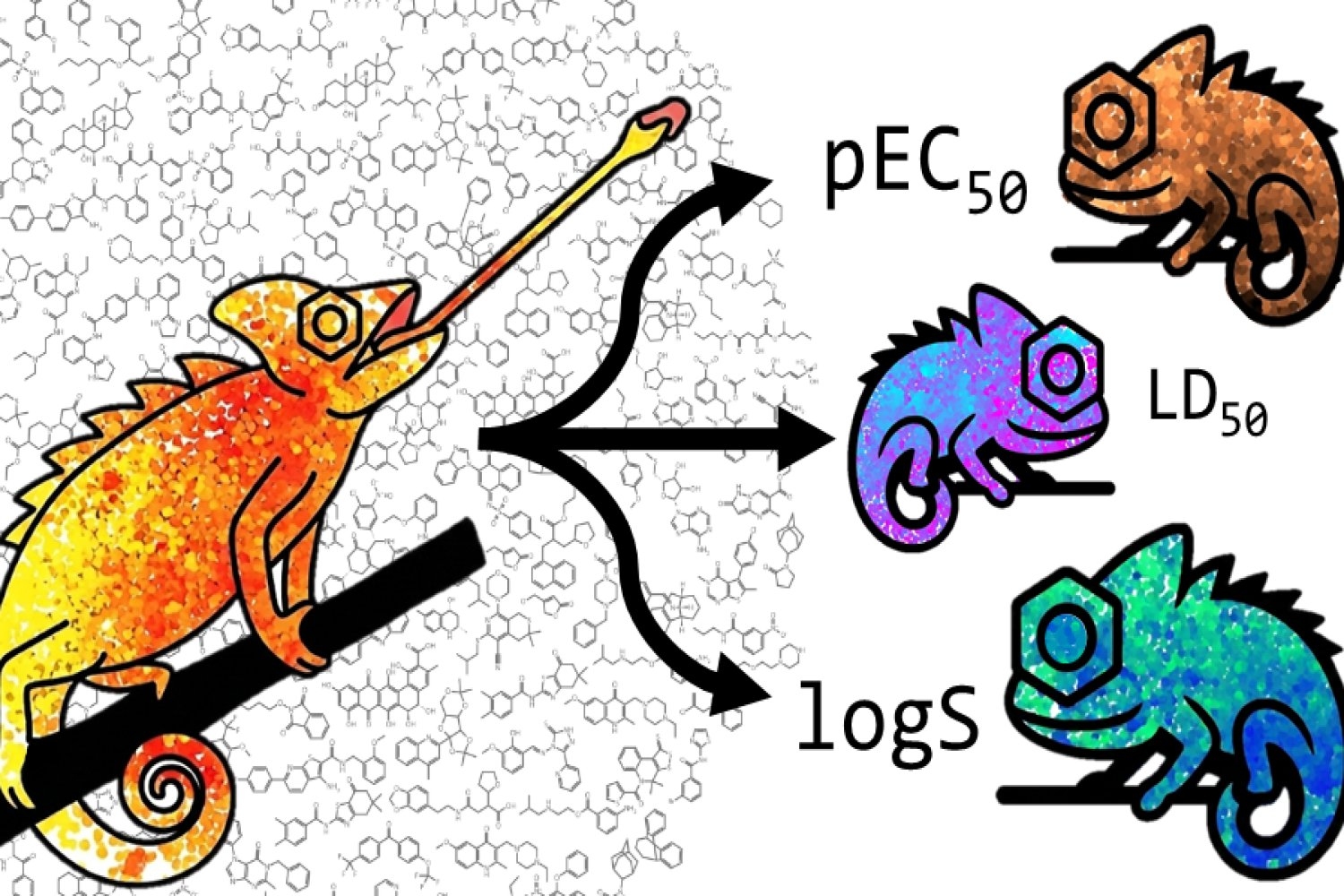
How to predict the behavior of molecules from scant data
A machine-learning approach called CheMeleon provides a practical way to develop new drugs or other molecules with much less detailed, expensive experimentation.
MIT News - Artificial intelligence0 followersVerified Stay connected and personalize your Newswire experience.
Loading recommendations…