


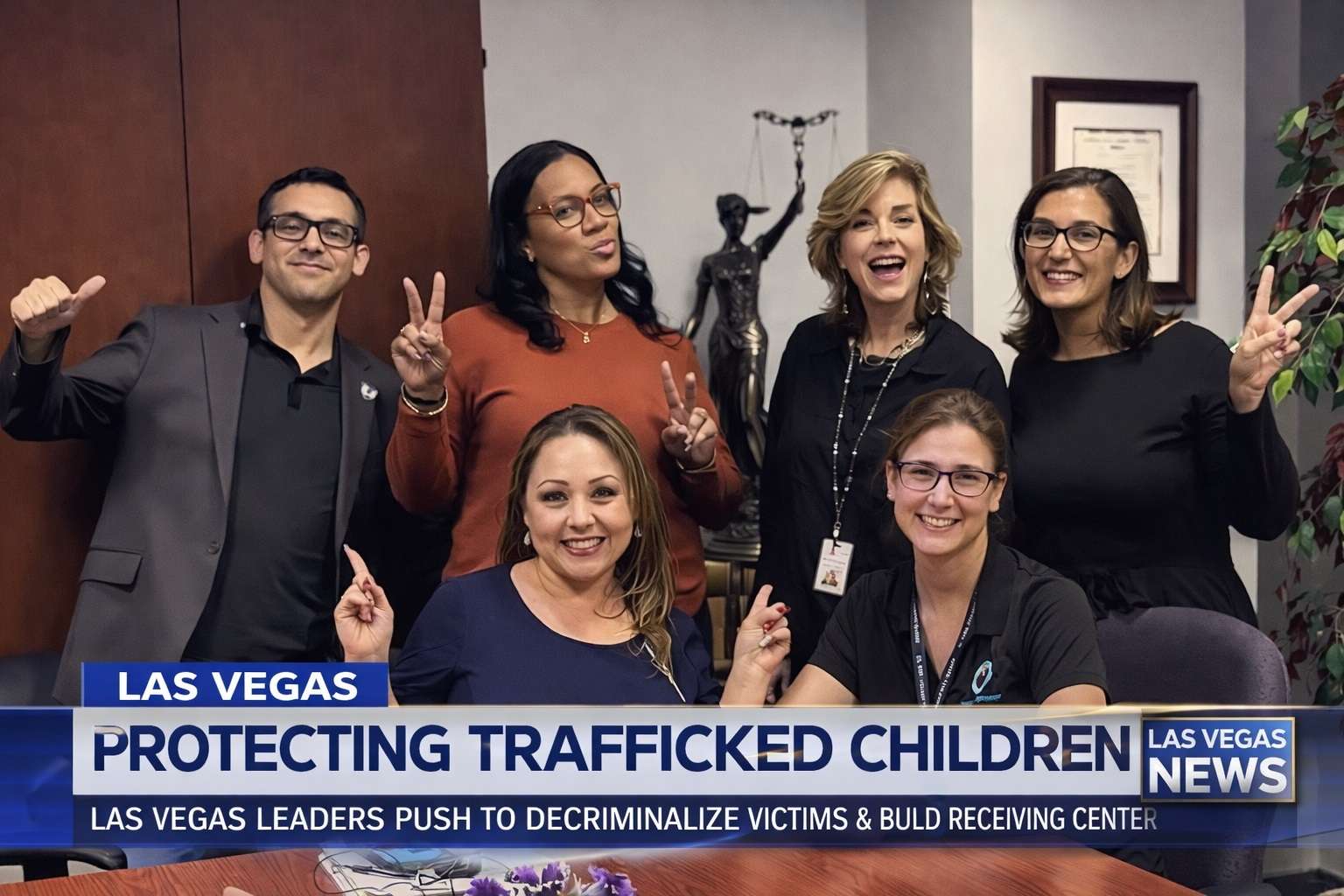
LAS VEGAS (Las Vegas News) — Community advocates, legal experts and local officials are advancing efforts to decriminalize child trafficking victims and expand protections for vulnerable youth in Southern Nevada.
A collaborative discussion involving representatives from the District Attorney’s Office, Department of Family Services (DFS) and legal advocacy groups highlighted a growing initiative to establish a specialized receiving center for children who have been trafficked. The goal is to break the cycle that often leads foster youth back into exploitation.
The effort was discussed by Ellie Roohani, a human trafficking victims’ advocate with the Legal Aid Center and the Resiliency & Justice Center, during a conversation with Clark County Courts Judge Margaret Pickard, along with DFS officials Jennifer Erbes and Allyson Manumaleuna.
Focus on Breaking the Cycle
Advocates say trafficked children are too often treated as offenders rather than victims — a systemic issue they aim to correct through policy reform and expanded services.
The proposed receiving center would provide immediate, trauma-informed care for rescued youth, offering a safe alternative to detention or returning them to unstable environments. Officials say this model is critical to preventing re-exploitation.
“Decriminalizing victimization is a key step toward ensuring these children receive the support they need rather than punishment,” participants emphasized during the discussion.
Foster Care Vulnerabilities Highlighted
The conversation also addressed the disproportionate risk faced by youth within the foster care system, who are frequently targeted by traffickers due to instability, lack of resources and limited support networks.
Officials and advocates noted that without intervention, many victims are repeatedly drawn back into trafficking situations — underscoring the urgency of systemic reform.
Multi-Agency Collaboration
The initiative reflects a coordinated approach among law enforcement, courts and social services to address human trafficking at its root.
The Legal Aid Center and Resiliency & Justice Center continue to play a central role in victim advocacy, while DFS and the courts are working to align policies that prioritize rehabilitation over criminalization.
Public Engagement and Awareness
The full discussion is available through Our Nevada Judges, Inc., which hosted the conversation to raise awareness and encourage community involvement in addressing trafficking and foster care challenges.
Officials say public education and cross-agency collaboration will be essential to implementing lasting change.






This is an important step forward for Las Vegas. Protecting trafficked children starts with recognizing them as victims and providing safe, trauma-informed care.
At New Hope Foundation International, we see firsthand how vulnerable youth can be pulled back into exploitation without the right support systems in place. A dedicated receiving center can help break that cycle and give these children a real chance at recovery.
We support continued collaboration between advocates, courts and family services to ensure no child falls through the cracks. The community is paying attention, and this work matters.
We encourage others in the community to share their perspectives here so these voices can be seen.
This is something our community has needed for a long time. These kids are victims, not criminals. A safe place like a receiving center could make a real difference in breaking the cycle.
Foster youth are especially vulnerable, and it’s clear more needs to be done to protect them. Without the right support, they can end up right back in dangerous situations. This kind of initiative is a step in the right direction.
It’s heartbreaking to think about what these kids go through. They deserve safety, support and a chance to heal. Hopefully this leads to real change and not just discussion.
What do you think would make the biggest difference for these kids right now, stronger laws or more support services like a receiving center?
This is good 👏