

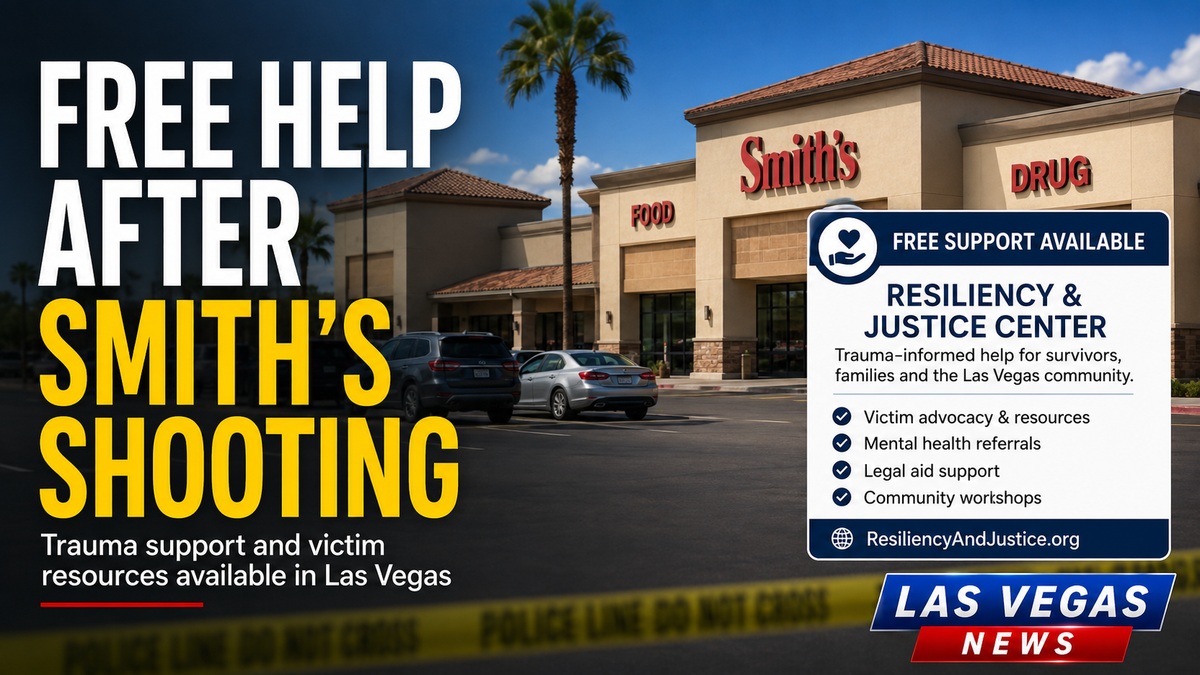
The Resiliency & Justice Center is offering free and confidential support for people affected by the deadly May 12 Smith’s Food & Drug shooting in Las Vegas.
Were you impacted by the Las Vegas Smith’s shooting? Free help is available.
Support is available for witnesses, workers, shoppers, families, bystanders and others affected by the deadly grocery store incident.
What You Should Know
- The Resiliency & Justice Center is offering free and confidential support for people impacted by the May 12 Smith’s grocery store shooting in Las Vegas.
- Support may be available for victims’ families, witnesses, store employees, shoppers, nearby workers, bystanders and others emotionally affected by the incident.
- Available services include victim advocacy, mental health referrals, legal aid, behavioral health navigation and help with Victims of Crime Program applications.
- The shooting happened inside the Smith’s Food & Drug at 9700 S. Maryland Parkway, near Silverado Ranch Boulevard.
- Police said two people were killed, and bystanders helped restrain the suspect until officers arrived.
LAS VEGAS (Las Vegas News) — People affected by the deadly Smith’s Food & Drug shooting in Las Vegas can now access free and confidential trauma support, victim advocacy and legal resources through the Resiliency & Justice Center.
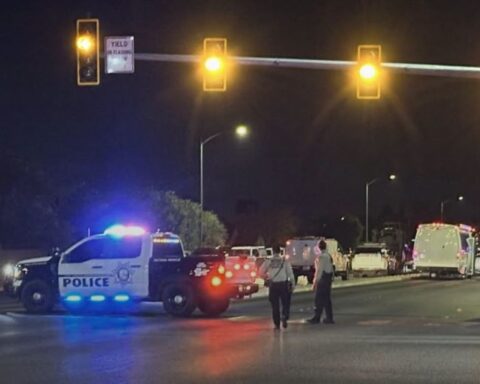
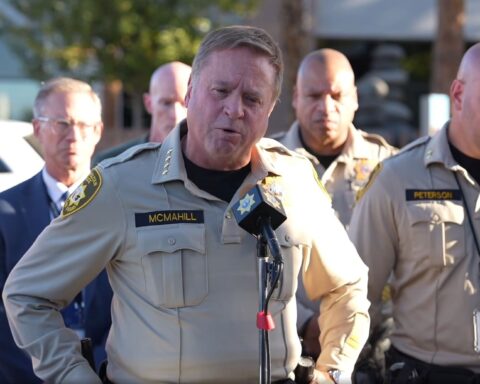
The outreach follows the May 12 shooting at the Smith’s Food & Drug in the 9700 block of South Maryland Parkway, near Silverado Ranch Boulevard. Authorities said two people were killed, and the suspect was taken into custody after bystanders helped restrain him before officers arrived.
The Resiliency & Justice Center, operated through the Legal Aid Center of Southern Nevada, said it is available to assist people impacted by the incident, including victims’ families, witnesses, store employees, shoppers, nearby workers, bystanders and others shaken by the violence.
Need help after the May 12 Smith’s shooting?
Anyone affected by the incident can contact the Resiliency & Justice Center for free and confidential support.
Website: ResiliencyAndJustice.org
Email: [email protected]
Phone: 702-455-2433
A local tragedy with a wider community impact
Grocery stores are everyday spaces where workers, families and shoppers expect routine and safety. When violence erupts in such a familiar public setting, the emotional impact can extend far beyond the people physically injured.
Witnesses may struggle with shock, fear, anxiety, difficulty sleeping, intrusive memories or a sudden reluctance to return to public places. Employees may face the added burden of processing grief while also thinking about returning to work. Families and friends of the victims may need support navigating the legal, emotional and practical aftermath of a violent crime.
That is where victim-support organizations can play a critical role. The Resiliency & Justice Center was created to help survivors of violent crime and their families connect with resources, understand available options and begin the process of healing after tragedy.
Public violence can affect witnesses, workers, families, first responders and entire neighborhoods. Support after trauma is not only for those physically injured.
What the Resiliency & Justice Center provides
The Resiliency & Justice Center provides trauma-informed services for survivors of violent crime and their families. Its services include advocate assistance, mental health support group referrals, legal aid for issues connected to victimization, help applying for the Victims of Crime Program, behavioral health navigation and online or in-person workshops.
The center says all services are free and confidential. For people affected by the Smith’s shooting, that can mean help finding counseling, understanding victim compensation options, connecting with legal support or getting help with the paperwork and next steps that often follow a violent incident.
Victim advocates can also help people determine whether they qualify for assistance even if they were not physically injured. People who witnessed the shooting, helped during the incident, worked nearby, knew the victims or have experienced emotional distress after the event may still benefit from speaking with a support professional.
Why trauma support matters after public violence
Trauma does not always appear immediately. Some people may feel numb in the first hours after an incident and begin struggling days later. Others may feel anxious in public spaces, become hyper-alert to sudden sounds, avoid grocery stores or experience recurring memories of what happened.
Those reactions can be common after witnessing or being close to violence. They can also become harder to manage when people try to ignore them or handle them alone. Early support can help people process what happened, identify symptoms, connect with professional care and reduce the risk of longer-term emotional harm.
Support services can also help people address practical needs. After a violent crime, affected individuals may need legal information, documentation, referrals, help with compensation applications, workplace support or guidance about how to talk with children and family members about what happened.
Bystanders credited after deadly shooting
The shooting also drew attention to the actions of bystanders who reportedly helped restrain the suspect until officers arrived. Police and public officials have credited the intervention as an important factor in bringing the incident under control.
Their actions became part of the broader community response to the tragedy. In the aftermath of violent incidents, the public often focuses first on the criminal investigation. But recovery also includes the witnesses, employees and ordinary residents who were suddenly placed in a crisis.
People who intervened, rendered aid or witnessed the violence may experience their own emotional aftereffects. Victim advocates often encourage bystanders and witnesses to seek support even when they initially feel they are “fine” or believe help should be reserved only for families of the victims.
Community reaction after the Smith’s shooting
Public officials and local agencies responded to the shooting with condolences and resource information. Congresswoman Dina Titus posted that her thoughts were with those affected by the shooting at Smith’s Food & Drug and said the violence had no place in the community.
Clark County also shared information directing the public to the Resiliency & Justice Center for help after the incident. The county’s message emphasized that resources are available for people in need.
The case also highlights the way private conflicts can spill into public spaces, affecting workers, customers, bystanders and families. Advocates often urge people facing threats, harassment or escalating conflict to seek help early, document concerning behavior and contact appropriate support services or law enforcement when safety is at risk.
What happens next in the case
The criminal case is expected to move through the Clark County court system, where prosecutors will present the allegations and evidence. As with all defendants, the suspect is presumed innocent unless and until proven guilty in court.
Authorities have not said there is any ongoing danger connected to the case. The Smith’s shooting remains a painful event for the victims’ families, employees, shoppers and the surrounding Las Vegas community.
For many people, the immediate police response is only the beginning of recovery. Families may need help with grief, witnesses may need counseling, employees may need support returning to work, and community members may need reassurance that they are not alone after what they saw or experienced.
About the Resiliency & Justice Center
- The Resiliency & Justice Center serves survivors of violent crime and their families across Nevada.
- The center grew out of the Vegas Strong Resiliency Center formed after the Oct. 1, 2017, Route 91 Harvest Festival shooting.
- It is managed by the Legal Aid Center of Southern Nevada.
- Its work includes helping people connect with legal, emotional, behavioral health and practical support resources.
- Services are free and confidential for people affected by violent crime.
How to get help
Anyone affected by the May 12 Smith’s grocery store shooting can contact the Resiliency & Justice Center directly. People do not need to wait until symptoms become severe before asking for support.
Support may be available for people who were inside the store, knew the victims, helped during the incident, work at or near the location, responded afterward or are struggling emotionally after learning about the shooting.
People in immediate danger should call 911. The Resiliency & Justice Center is a support resource for people affected by violent crime and related trauma.
Free support after the Las Vegas Smith’s shooting
The Resiliency & Justice Center is available to assist anyone affected by the May 12 grocery store shooting in Las Vegas.
Website: ResiliencyAndJustice.org
Email: [email protected]
Phone: 702-455-2433
A community response starts with support
Recovery after public violence requires more than a police response. It requires families, witnesses, workers, public agencies, support organizations and community members to recognize the impact of trauma and help people connect with trusted resources.
The Resiliency & Justice Center is urging anyone affected by the Smith’s shooting not to minimize the emotional impact. Whether someone was directly present, knew the victims, helped restrain the suspect or is struggling after learning about the incident, support is available.
For Las Vegas, the tragedy is another reminder that community safety includes prevention, accountability and long-term care for those harmed by violence.
Follow Crime, Safety and Community Impact Coverage
Las Vegas News continues covering public safety, victim resources, community outreach, local crime, homelessness, vulnerable populations and nonprofit support efforts across Southern Nevada.
Read more Crime & Safety coverage
Frequently Asked Questions
Who can get help after the Las Vegas Smith’s shooting?
Support may be available for victims’ families, witnesses, Smith’s employees, shoppers, nearby workers, bystanders and others emotionally affected by the May 12 incident.
What services does the Resiliency & Justice Center provide?
The center provides victim advocacy, mental health referrals, legal aid, behavioral health navigation, support connections and help with Nevada Victims of Crime Program applications.
Is the support free?
Yes. The Resiliency & Justice Center says its services are free and confidential for people affected by violent crime.
How do I contact the Resiliency & Justice Center?
People seeking help can visit ResiliencyAndJustice.org, email [email protected] or call 702-455-2433.
What should someone do if they are in immediate danger?
Anyone in immediate danger should call 911. The Resiliency & Justice Center is a support resource for people affected by violent crime and related trauma.
Disclosure: This article includes public resource information for the Resiliency & Justice Center and links to related Las Vegas News coverage. Las Vegas News encourages readers affected by violent crime to contact verified support organizations, emergency services or law enforcement when appropriate.
Help other readers find trusted local news
A short review helps Las Vegas readers discover fact-based reporting and supports independent local journalism.