


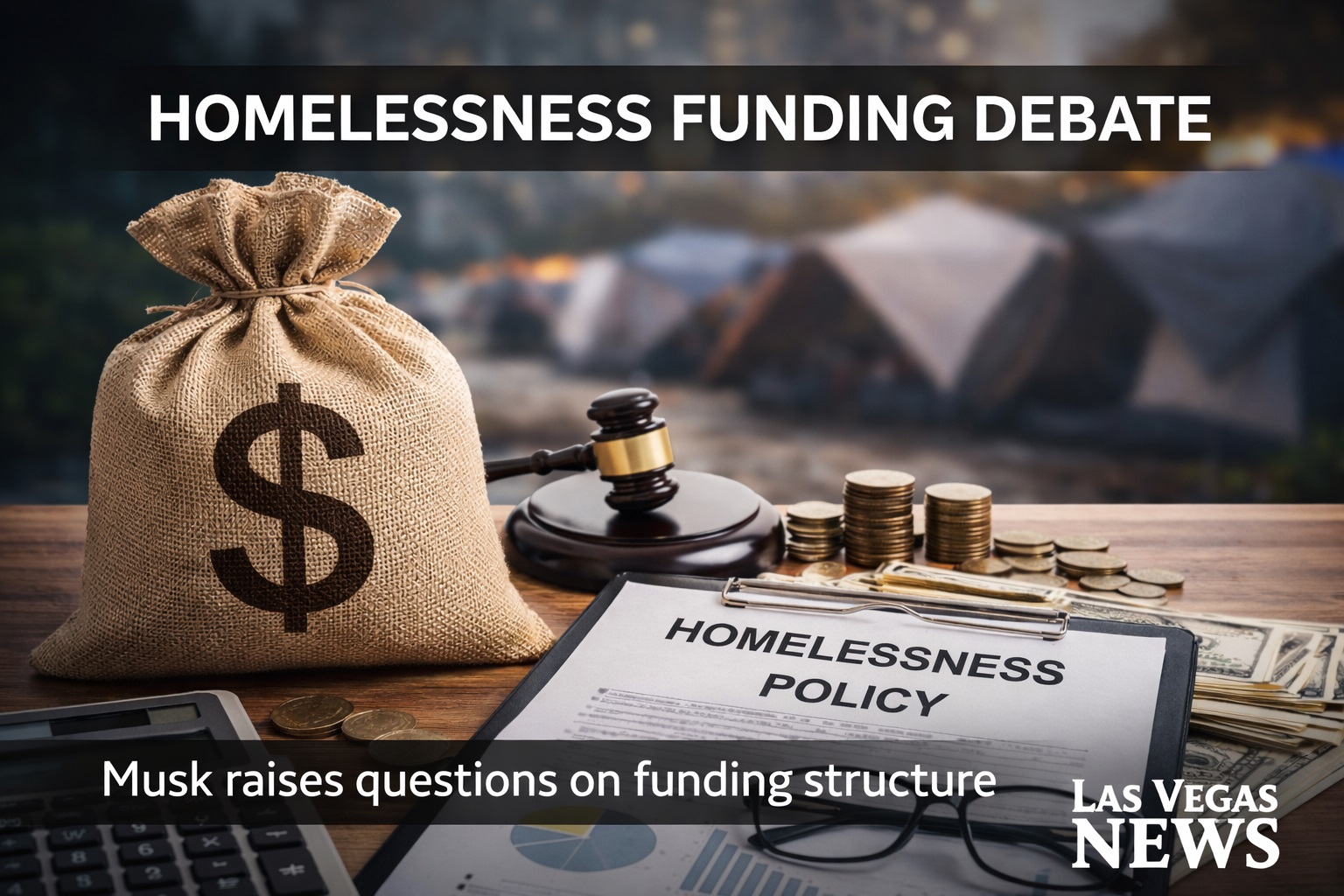
LAS VEGAS (Las Vegas News) — Elon Musk is drawing renewed attention to how financial incentives may shape homelessness policy outcomes, arguing that some funding structures could unintentionally sustain the problem rather than resolve it.
In a recent post on X, Musk wrote that “incentives drive outcomes,” sharing a video clip of himself criticizing what he described as a “homeless industrial complex.” In the clip, Musk suggested that certain nonprofit organizations and service providers receive funding based on the number of unhoused individuals they serve, rather than measurable success in reducing homelessness.
Musk’s remarks included controversial language, referring to parts of the system as “drug zombie farmers,” a phrase that has drawn criticism for its tone. His broader argument centers on how incentive structures can influence institutional behavior — a concept economists often describe as “perverse incentives,” where systems designed to address a problem may unintentionally encourage its continuation.
Musk did not provide specific data or studies in the post to support his claims, which reflect his personal views on the effectiveness of current homelessness funding models.
According to the U.S. Department of Housing and Urban Development, more than 650,000 people were experiencing homelessness in the United States on a single night in 2023, marking a record high. The data underscores the scale and complexity of the issue nationwide.
Federal homelessness policy in recent years has emphasized a “Housing First” approach, which prioritizes placing individuals into permanent housing before addressing other challenges such as employment, mental health or substance use. Supporters of this model argue it has been effective in improving housing stability, while critics say outcomes can vary depending on implementation and local conditions.
Housing policy experts note that many publicly funded programs already incorporate performance-based elements, including metrics such as housing placement rates, retention and long-term stability. However, the balance between funding for immediate services — such as shelter, food and medical care — and long-term outcomes remains a subject of ongoing debate.
In Las Vegas and across Southern Nevada, local agencies and nonprofit organizations coordinate regional efforts to address homelessness through emergency services, outreach programs and housing initiatives. Officials have reported persistent challenges, including rising housing costs and limited affordable housing supply.
Debates over how to measure success in homelessness programs have persisted for decades, particularly around whether funding should prioritize service capacity or long-term reductions in homelessness. Musk’s comments add to that broader national conversation, highlighting ongoing questions about how best to align incentives with measurable outcomes.
As cities across the United States continue to confront homelessness, policymakers, service providers, and community leaders face increasing pressure to design systems that both meet immediate needs and produce lasting results.